
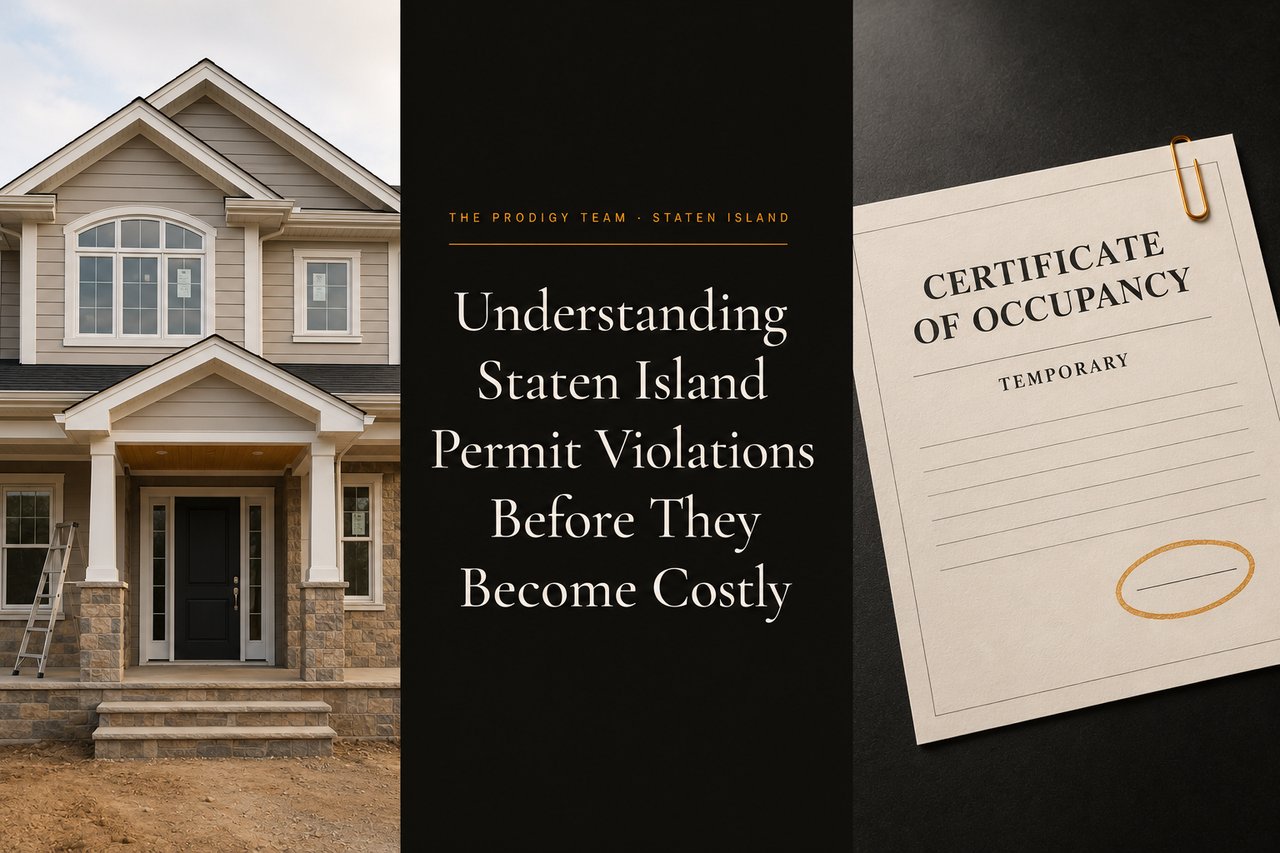
When the document that says your home is legal to live in has quietly expired
A Certificate of Occupancy states the legal use, layout, and occupancy of a building, and you can’t lawfully occupy a home without one — or a Temporary Certificate of Occupancy in its place. A TCO means the home is safe to occupy but still has outstanding items before a final C of O can issue.
The catch is that a TCO typically expires in about 90 days and must be renewed. An expired TCO, or an older Staten Island home with no C of O on record at all, can complicate financing, insurance, and your closing.
This guide explains the difference between a TCO, a final C of O, and the Letter of No Objection some older homes need — and how to get your file to a clean state before you sell.
Afinal Certificate of Occupancy is meant to be permanent: it confirms the completed work matches the approved plans, all violations are resolved, all fees are paid, and every required City sign-off is in. A Temporary C of O is the City saying “safe to live in for now, but not finished.” The problem starts when “for now” quietly runs out and the final never gets issued.
TCO, final C of O, and the Letter of No Objection
A final Certificate of Occupancy is permanent and confirms the building fully complies and is closed out. A Temporary Certificate of Occupancy means the home is safe to occupy but has outstanding items; it usually expires after about 90 days and can be renewed only while real progress toward a final C of O continues. Some older Staten Island homes never needed a C of O when they were built — for many pre-1938 buildings, a Letter of No Objection from DOB confirms the legal use instead, and minor alterations may close with a Letter of Completion.
A TCO on a building that’s several years old is a red flag, not a technicality. It usually means a final C of O was never obtained, and the outstanding items have been sitting unresolved — sometimes for a long time.
Why it matters when you sell
Lenders and title companies want to see a current Certificate of Occupancy or a valid TCO. An expired TCO or a missing C of O can make a mortgage harder to obtain, complicate homeowner’s insurance, and create problems at closing and on any future refinance. Buyers can address some of this in the contract — for example, tying the closing to delivery of a C of O or holding funds in escrow — but those are concessions you’d rather not be making under deadline.
“A clean C of O is one of those things nobody notices until it’s missing. The week before closing is the worst possible time to discover your home’s occupancy paperwork doesn’t actually close out.”
Getting to a final C of O
Start by having a professional engineer or registered architect pull the file and identify exactly what stands between you and a final Certificate of Occupancy — outstanding inspections, open permits, unresolved violations, or unpaid fees. From there it’s a matter of completing the work, passing the inspections, clearing the violations, and submitting the final occupancy request to DOB. Where the underlying issue is unpermitted work, that has to be legalized first.
This is closely tied to your open permits and violations and any unpermitted additions, which often are the outstanding items blocking the final C of O.
Your proactive game plan
Pull your Certificate of Occupancy from DOB before you list and read it against your home. If you’re on a TCO, confirm whether it’s current and what remains for a final. If there’s no C of O at all, find out whether you need one or whether a Letter of No Objection fits. The City’s own guidance on the Temporary Certificate of Occupancy is a useful starting point.
Look up your C of O today. If it’s a TCO, note the expiration; if there’s none on file, get a PE or RA to tell you what’s required. These run on long clocks, so early is everything.
For the full sequence, see the clear-title playbook and the pre-listing self-audit.
Frequently asked questions
Can I sell a Staten Island home that only has a Temporary C of O?
You can, but it adds risk and friction. Lenders and title companies scrutinize TCOs, especially expired ones, and financing or insurance can get complicated. Buyers often want the contract to tie closing to a final C of O or hold funds in escrow until it’s issued.
What if my home has no Certificate of Occupancy at all?
It depends on the home’s age and history. Many older Staten Island homes never required one; for many pre-1938 buildings a Letter of No Objection from DOB can confirm the legal use. A professional engineer or architect can tell you which document you actually need.
What is a Letter of No Objection?
It’s a DOB document used for older buildings — generally those built before 1938 that didn’t require a C of O at the time — that confirms the building’s legal use when no Certificate of Occupancy exists.
Will a lender finance a home without a final C of O?
Sometimes, with a valid TCO and the right contract terms, but it’s harder. An expired TCO or a missing C of O can stall or block a mortgage, which is why getting your occupancy paperwork current before listing matters.

Anthony Licciardello, Broker, The Prodigy Team
Anthony is a licensed real estate broker in New York and New Jersey and has run The Prodigy Team across Staten Island and New Jersey for more than 20 years. A former Director of Community Affairs in the Bloomberg administration and a member of the Staten Island Growth Management Task Force, he has spent his career on the land-use, zoning, and title issues that decide whether a Staten Island sale actually closes. Questions about your own property? Call 718-873-7345 or visit his agent profile.
Living on a TCO — or no C of O at all? Let’s get your file in order before listing.
We'll run a pre-listing title and building-file review so you head to market with a clean file and full leverage.
Why Sell With The Prodigy Team →Or call Anthony directly at 718-873-7345
This article provides general information for Staten Island homeowners and does not constitute legal, tax, or title advice. Laws, fees, and City programs change; verify current requirements with the relevant agency and consult a licensed attorney, tax professional, or title company about your specific property.