
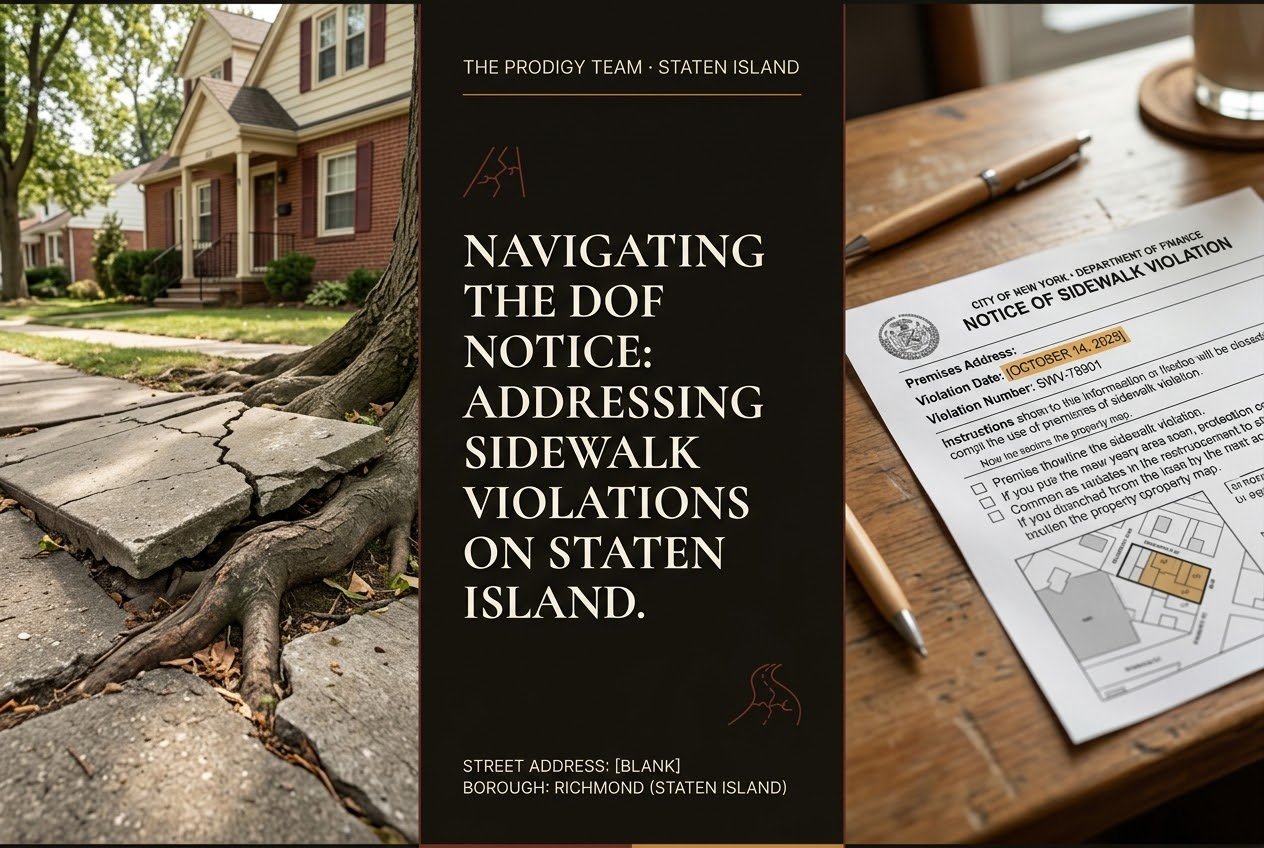
The cracked flag out front that the City can fix — and bill to your title
On Staten Island, the sidewalk in front of your home is your responsibility, even though the City owns the land under it. Under Administrative Code §19-152, the abutting owner has to keep that sidewalk in safe condition, and the Department of Transportation can issue a Notice of Sidewalk Violation when it doesn’t.
Here’s the part that surprises sellers: the violation notice itself carries no fine. It starts a clock. Ignore it and the City can make the repair, bill you for the work, and place a lien if the bill goes unpaid — and that lien surfaces in your title search.
This guide explains the 75-day repair window, how a sidewalk bill becomes a lien, and the Staten Island break most owners don’t know about: the City-tree exemption for one-, two-, and three-family homes.
The sidewalk is a strange piece of property law. The City owns it, but the law makes you maintain it, and the most common cause of damage on Staten Island — the roots of a City-planted street tree heaving a concrete flag — is exactly the situation where homeowners assume they’re on the hook but often are not. Understanding the rules turns a vague worry into a manageable checklist item.
Whose sidewalk is it, legally
Under New York City Administrative Code §19-152, the owner of property abutting a sidewalk is responsible for keeping it in a reasonably safe condition — repairing cracks, trip hazards, missing or broken flags, and similar defects. The Department of Transportation inspects sidewalks and issues a Notice of Sidewalk Violation when it finds a defect. Importantly, that notice does not carry a monetary penalty; it is a directive to repair, and it also gets recorded so it can show up when someone searches the property.
A sidewalk violation can sit on the record quietly for years. It won’t fine you, so it’s easy to ignore — until a buyer’s title company finds the recorded violation or, worse, the lien that grew out of an unpaid City repair bill.
The 75-day clock and how a bill becomes a lien
Once DOT issues the violation, you generally have 75 days to make the repair yourself or hire a contractor to do it. If you don’t, the City can perform the repair and charge you for the cost. An unpaid City repair charge is what turns a maintenance issue into a title problem: the charge can be entered against the property and become a lien collectible like other municipal charges. At that point clearing it is no longer a weekend of concrete work — it’s a payoff that has to be satisfied before or at closing.
“The sidewalk is the rare title problem you can often fix yourself with a contractor and a weekend. The trick is doing it while it’s still a repair — not after it’s become a City bill with a lien attached.”
The Staten Island City-tree break
Here is the relief most owners miss. For one-, two-, and three-family homes that are owner-occupied and used only for residential purposes, the City does not hold the owner financially responsible for sidewalk damage caused solely by the roots of a City-owned street tree. The City has also been working through a backlog of older tree-related sidewalk liens, cancelling qualifying ones. If your damaged flag sits right beside a City street tree, that’s a fact worth documenting before you pay for anything.
Staten Island has more of the leafy, tree-lined residential blocks where this comes up than almost anywhere in the city. If a street-tree root caused your damage, photograph it and check the exemption before assuming the repair is on you.
Your proactive game plan
Before you list, check whether any sidewalk violation is on record for your address and walk the sidewalk yourself for trip hazards and broken flags. If you find a defect, determine the cause — ordinary wear versus a City street tree — and repair what’s yours to repair, keeping receipts and photos. If a lien already exists, get a payoff figure early so it doesn’t become a closing-day surprise.
Walk your sidewalk this weekend and look up your address for any DOT violation. A flag you fix now for a few hundred dollars is far cheaper than a City repair bill turned lien that you settle at closing.
Sidewalk issues sit alongside curb cuts as the two public-way items in front of your home, and an unpaid charge behaves like the other liens in this series. See the clear-title playbook for the full map.
Frequently asked questions
Do I have to fix my sidewalk before selling my Staten Island home?
If there’s a defect or a Notice of Sidewalk Violation, it’s wise to. The notice gives you about 75 days to repair before the City can do the work and bill you. An unpaid City bill can become a lien that has to be cleared at closing, so handling it early is cheaper and simpler.
Does a sidewalk violation come with a fine?
No. The Notice of Sidewalk Violation itself carries no monetary penalty — it’s a directive to repair. The cost risk comes later: if you don’t repair within the window, the City can make the repair and charge you, and an unpaid charge can become a lien.
What if a City tree caused the sidewalk damage?
For owner-occupied one-, two-, and three-family homes used only as residences, the City generally does not hold you financially responsible for sidewalk damage caused solely by the roots of a City-owned street tree. Document the tree and the damage before paying for repairs.
How does a sidewalk lien end up on my title?
If the City repairs a sidewalk you failed to fix and you don’t pay the bill, that charge can be entered against the property and become a lien. It then appears in a title search and must be satisfied before you can deliver clean title.

Anthony Licciardello, Broker, The Prodigy Team
Anthony is a licensed real estate broker in New York and New Jersey and has run The Prodigy Team across Staten Island and New Jersey for more than 20 years. A former Director of Community Affairs in the Bloomberg administration and a member of the Staten Island Growth Management Task Force, he has spent his career on the land-use, zoning, and title issues that decide whether a Staten Island sale actually closes. Questions about your own property? Call 718-873-7345 or visit his agent profile.
Got a cracked sidewalk or an old DOT violation? Let’s clear it before you list.
We'll run a pre-listing title and building-file review so you head to market with a clean file and full leverage.
Why Sell With The Prodigy Team →Or call Anthony directly at 718-873-7345
This article provides general information for Staten Island homeowners and does not constitute legal, tax, or title advice. Laws, fees, and City programs change; verify current requirements with the relevant agency and consult a licensed attorney, tax professional, or title company about your specific property.