
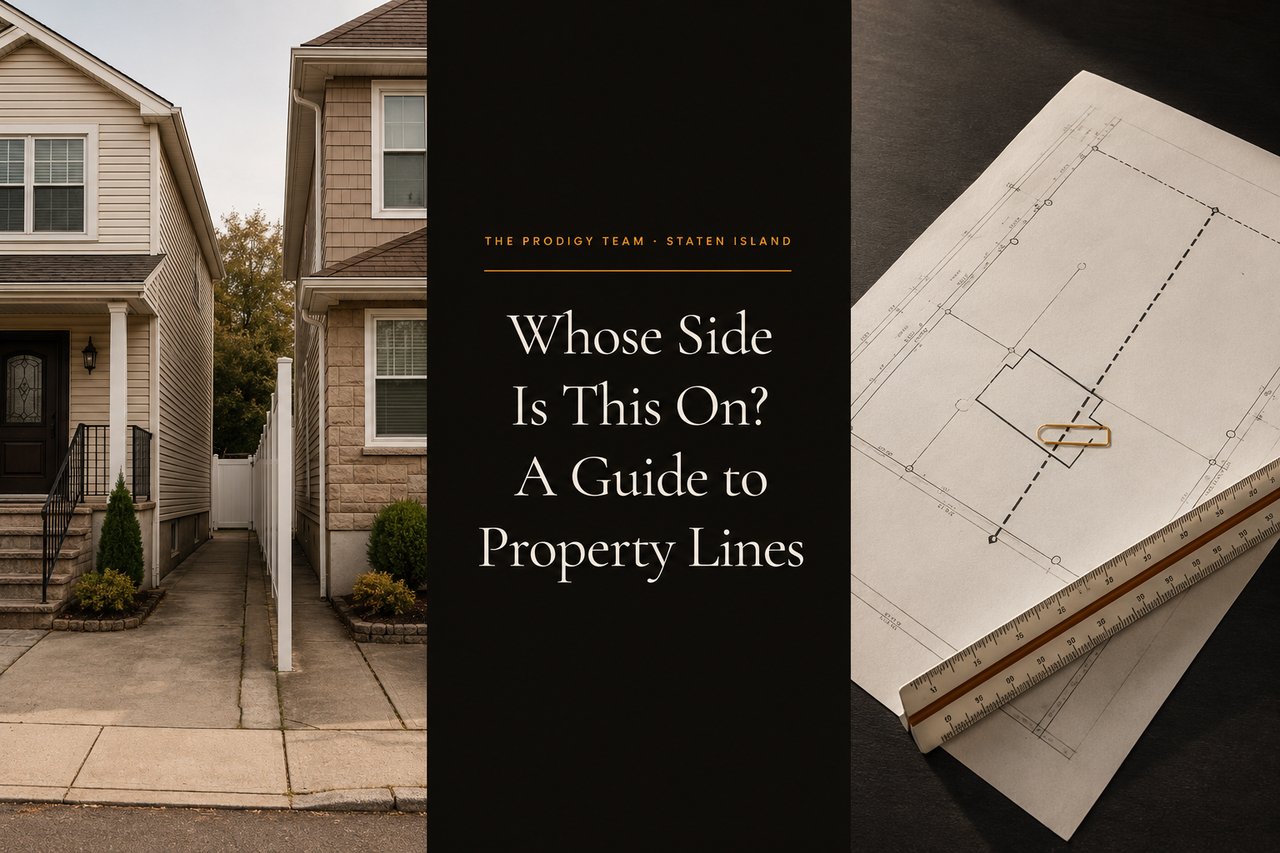
The fence that’s been there for 30 years — on the wrong side of the line
A current survey is where the physical property meets the legal one, and on Staten Island’s older, irregular lots the two don’t always agree. A fence, driveway, garage corner, shed, or roof overhang can sit inches or feet across a boundary — yours onto a neighbor’s land, or theirs onto yours.
These encroachments are routine, and most are solvable. But a title company will flag them, and a lender may want them resolved or affirmatively insured before closing.
This guide covers what counts as an encroachment, how it shows up in a Staten Island sale, and the practical ways it gets cured — ideally while you still control the timing.
Most homeowners have never seen a current survey of their own property. They rely on a decades-old one from their purchase, or on the simple fact that the fence has “always been there.” Neither tells you where the legal boundary actually runs — and on Staten Island, where many lots predate modern subdivision standards, the difference between assumed and actual lines is where deals snag.
What an encroachment is
An encroachment is any physical thing that crosses a property boundary — a fence, driveway, retaining wall, garage, shed, deck, or even an eave or gutter that overhangs the line. It works in both directions: your improvement may sit on a neighbor’s lot, or a neighbor’s may sit on yours. Related survey red flags include structures that violate required setbacks and easements running through the property that the owner forgot existed.
Staten Island’s older neighborhoods are full of shared driveways and fences set generations ago by handshake, not by survey. They’re charming until a closing, when the title company asks exactly whose land that driveway sits on.
How it surfaces in a sale
Encroachments almost always appear on a current survey ordered for the transaction, and then as an exception on the title report. The danger is timing: if the first survey anyone has looked at in 20 years is the buyer’s, the problem surfaces late, with a nervous buyer and a lender attached. An old survey in your drawer may not show a fence or addition that went up after it was drawn, which is exactly why a fresh one matters.
“The cheapest survey you’ll ever buy is the one you order yourself before listing. The most expensive is the one the buyer’s lender orders three weeks before closing.”
How encroachments get cured
The right cure depends on the size and direction of the problem. Common paths include a boundary line agreement or easement recorded between neighbors, a lot line adjustment, physically relocating the offending structure, or having the title company provide affirmative coverage that “insures over” a minor, long-standing encroachment so the lender is satisfied. A real estate attorney and a licensed surveyor drive this; your job as the seller is to start it early.
Long-standing encroachments can raise adverse-possession questions — the legal doctrine where long, open use of someone else’s land can ripen into a claim. That’s a conversation for an attorney, not something to settle with a neighbor over the fence.
Your proactive game plan
Order a current survey before you list and compare it against your deed and any prior survey. If it shows an encroachment, get an attorney’s read on the cleanest cure and, where a neighbor is involved, start that conversation while the relationship is friendly and the clock is yours.
Pull your deed and order a current survey now. Even if it comes back clean, you’ll hand the buyer a fresh survey and remove one of the most common reasons Staten Island closings slip.
Unpermitted structures often show up on the same survey, so read this alongside the guide to illegal decks and additions and the pre-listing self-audit.
Frequently asked questions
Do I need a new survey to sell my Staten Island home?
It’s not always legally required, but it’s one of the smartest pre-listing moves you can make. A current survey catches encroachments, unpermitted structures, and setback issues before the buyer’s survey does, when you still have room to fix them.
What if my neighbor’s fence is on my land — or mine is on theirs?
That’s a classic encroachment. Depending on the situation it can be resolved with a recorded boundary line agreement or easement, a lot line adjustment, relocation of the structure, or affirmative title coverage. A real estate attorney and surveyor should guide the specific cure.
Can title insurance just cover an encroachment?
Often, yes, for minor, long-standing ones. Title insurers frequently provide affirmative coverage that “insures over” the issue so the lender is comfortable. Larger or disputed encroachments usually need an actual cure, not just coverage.
Will an encroachment stop my closing?
It can delay it if it’s discovered late and the lender wants it resolved. Found early, most encroachments are manageable. The risk is timing, which is why ordering your own survey before listing is the key move.

Anthony Licciardello, Broker, The Prodigy Team
Anthony is a licensed real estate broker in New York and New Jersey and has run The Prodigy Team across Staten Island and New Jersey for more than 20 years. A former Director of Community Affairs in the Bloomberg administration and a member of the Staten Island Growth Management Task Force, he has spent his career on the land-use, zoning, and title issues that decide whether a Staten Island sale actually closes. Questions about your own property? Call 718-873-7345 or visit his agent profile.
Not sure where your property actually ends? Let’s find out before a buyer does.
We'll run a pre-listing title and building-file review so you head to market with a clean file and full leverage.
Why Sell With The Prodigy Team →Or call Anthony directly at 718-873-7345
This article provides general information for Staten Island homeowners and does not constitute legal, tax, or title advice. Laws, fees, and City programs change; verify current requirements with the relevant agency and consult a licensed attorney, tax professional, or title company about your specific property.