
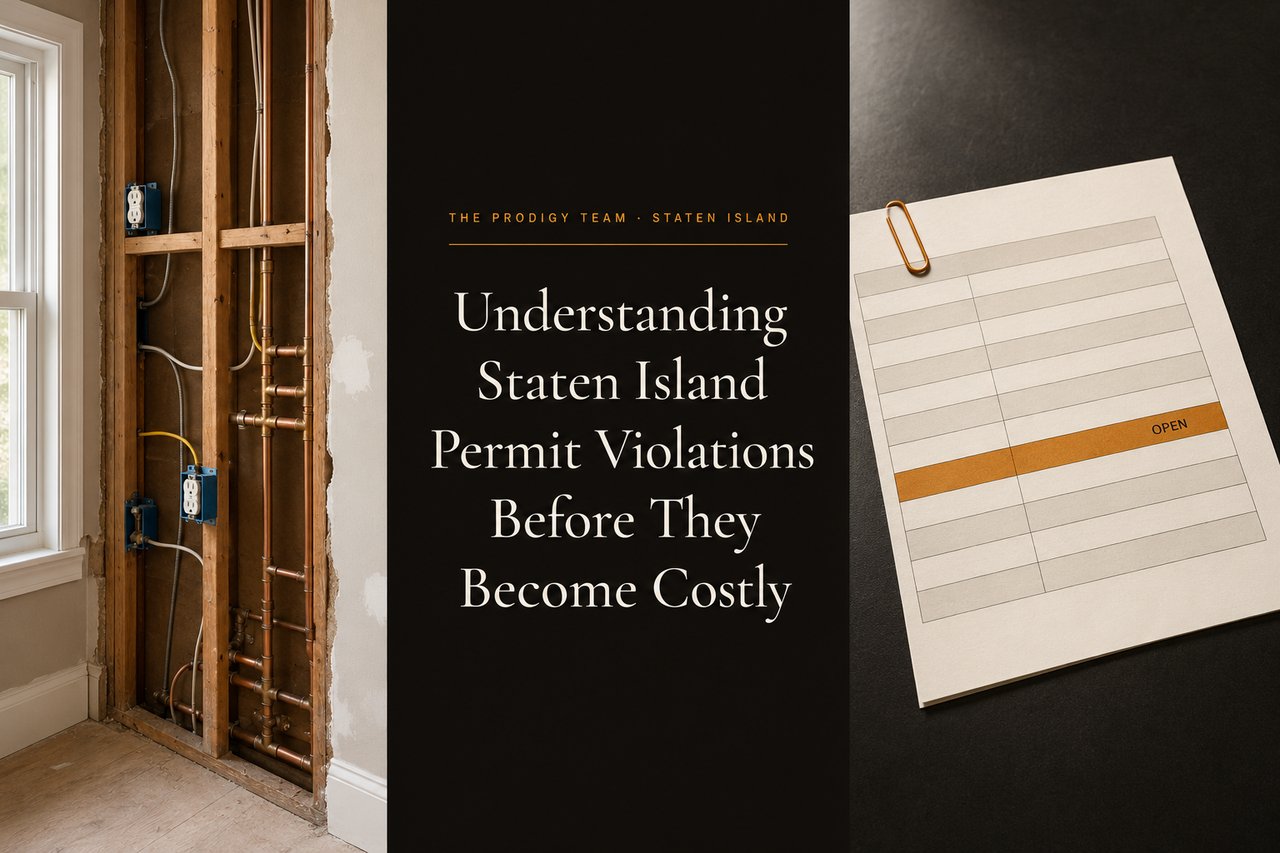
A permit that was pulled, the work that got done — and the sign-off that never happened
An “open permit” is one of the quietest title problems on Staten Island. Someone pulled a permit — often for electrical or plumbing work — the work got done, but the final inspection and sign-off never happened, so the permit never closed. Years later it’s still sitting open in the DOB system.
Open permits and unresolved DOB or ECB violations routinely surface during a buyer’s due diligence and can freeze your sign-off, financing, and closing. And in the building world, a job isn’t “done” until the record says it’s done.
This guide explains the difference between an open permit and a violation, how each shows up in a sale, and how to close them out before a buyer’s lender forces the issue.
People assume that once the electrician left and the work passed muster, the paperwork took care of itself. It often didn’t. An open permit means the City still expects a final inspection that never came, and until that record is updated, the home carries an unfinished file — one that title companies and lenders read closely.
Open permit vs. open violation
They’re related but different. An open permit is a permit that was issued but never signed off — the work may be complete and fine, but DOB still expects a final inspection to close the record. An open violation is an enforcement action: DOB or the Environmental Control Board (now heard at OATH) found something out of compliance. Common violation types include Work Without a Permit (§28-204.6), illegal conversion (§28-210.1), and Stop Work Order violations (§28-207.2), each with its own fine range.
Doing the physical work is not the same as resolving the record. If the permit isn’t signed off in the DOB system — or the violation isn’t formally closed — it is not resolved, no matter how good the work looks.
How they surface in a sale
Open permits and violations show up the moment someone pulls the building record: the title company’s municipal search, the lender’s review, or a new permit filing where DOB compares existing conditions to the Certificate of Occupancy. A large share of Work Without a Permit cases start with a neighbor’s 311 complaint. However it surfaces, the practical effect is the same — the deal pauses until the record is clean.
On Staten Island, you check the same City systems the other boroughs use for this: DOB’s BIS and DOB NOW for permits and violations. That’s separate from where Staten Island’s deeds and liens are recorded — the Richmond County Clerk — so a complete check means looking in both places.
Closing it out
Clearing an open permit usually means scheduling the final inspection or, if the original permit has lapsed, re-permitting the work retroactively and then signing it off. Clearing a violation means correcting the underlying condition, filing proof with DOB, passing re-inspection, paying any penalties, and confirming the record is closed in the system. Unpaid ECB/OATH fines are best paid promptly, since they can be entered as liens against the property if ignored. A licensed expediter or design professional makes this far faster than going it alone.
““The work was done years ago” is not a defense a lender accepts. If the system still shows it open, we close it in the system — that’s the only version of done that gets you to the closing table.”
Your proactive game plan
Search your address in BIS and DOB NOW before you list, and note every open permit and open violation. Hand the list to an expediter and start closing the oldest and most complex ones first, since those run on the longest clocks. If something can’t be cleared in time, an escrow holdback at closing is the common fallback — but resolving it up front is cheaper and cleaner.
Run your BIS and DOB NOW search this week. It’s free, it takes minutes, and it tells you exactly what a buyer’s title company is going to find.
Open permits often accompany unpermitted additions and feed directly into your Certificate of Occupancy status, so tackle them together.
Frequently asked questions
What exactly is an open permit?
It’s a permit that was issued but never closed out with a final inspection and sign-off. The work may be complete and perfectly good, but until DOB updates the record, the permit stays open — and shows up in title and lender reviews.
Can I close an old open permit myself?
Sometimes, by scheduling the final inspection. Often, though, the original permit has lapsed and the work has to be re-permitted retroactively before it can be signed off. A licensed expediter or design professional usually makes the process much faster.
Do open permits actually stop a sale?
They can. Open permits and violations regularly surface during title review, underwriting, and closing, and they often have to be resolved before a lender will fund. At minimum they slow the deal and weaken your negotiating position.
Can an unpaid DOB or ECB violation become a lien?
Yes. Unpaid Environmental Control Board (OATH) penalties can be entered as judgments and become liens against the property, which is why it’s worth resolving and paying them before they migrate onto your title.

Anthony Licciardello, Broker, The Prodigy Team
Anthony is a licensed real estate broker in New York and New Jersey and has run The Prodigy Team across Staten Island and New Jersey for more than 20 years. A former Director of Community Affairs in the Bloomberg administration and a member of the Staten Island Growth Management Task Force, he has spent his career on the land-use, zoning, and title issues that decide whether a Staten Island sale actually closes. Questions about your own property? Call 718-873-7345 or visit his agent profile.
Old permit still showing “open”? Let’s close it out before it stalls your sale.
We'll run a pre-listing title and building-file review so you head to market with a clean file and full leverage.
Why Sell With The Prodigy Team →Or call Anthony directly at 718-873-7345
This article provides general information for Staten Island homeowners and does not constitute legal, tax, or title advice. Laws, fees, and City programs change; verify current requirements with the relevant agency and consult a licensed attorney, tax professional, or title company about your specific property.