
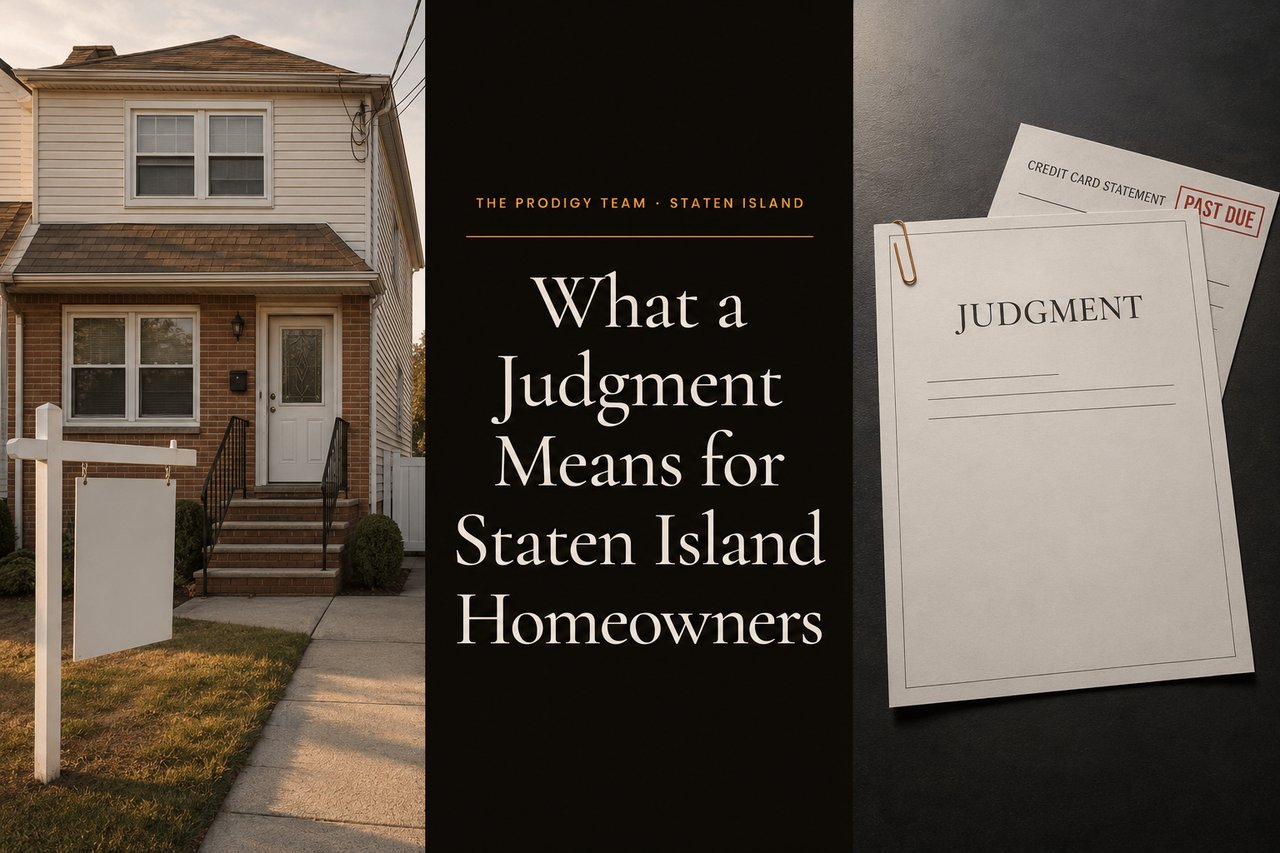
The credit-card lawsuit you forgot about — now sitting on your title
A money judgment is what a creditor gets when they win a lawsuit. The moment it’s docketed with the Richmond County Clerk, it becomes a lien on real property you own in the county — including the Staten Island home you’re trying to sell.
These often trace back to old, ordinary debts: a credit-card balance that went to collections, a hospital bill, a personal loan. Many sellers have genuinely forgotten the case exists until it appears in the title report.
This guide explains how a docketed judgment becomes a lien under CPLR 5203, how long it lasts, and the three ways to clear it — satisfy, release, or vacate — so it doesn’t blow up your closing.
Ajudgment lien is one of the most common title surprises, and one of the most avoidable. A creditor wins in court, dockets the judgment with the County Clerk, and from that moment it silently attaches to any real property you own in that county. You don’t get a fresh notice each year; it just sits there, accruing interest, waiting for the day you try to sell or refinance.
How a judgment becomes a lien on your home
When a creditor wins a money judgment and dockets it with the clerk of a county where you own real property, New York’s CPLR 5203 makes that judgment a lien on your real property in that county. For a Staten Island home, that docketing happens at the Richmond County Clerk. The lien attaches automatically — the creditor doesn’t have to take any further step against your specific house — and it covers property you own then and, in effect, reaches what you hold while the lien is active.
This is another reason the Richmond County Clerk, not ACRIS, is the office that matters on Staten Island. A docketed judgment against you shows up in the County Clerk’s records, which is exactly where a title company looks — and where a generic ACRIS search would miss it.
The ten-year life
A docketed money judgment is a lien on real property for ten years, and it can be renewed for an additional ten-year period. Meanwhile the underlying judgment itself is enforceable in New York for twenty years and accrues statutory interest the whole time, so an old credit-card judgment can be substantially larger than the original balance by the time it surfaces. The age of the case is no protection: a judgment from years ago, still within its lien period or renewed, remains a live cloud on your title.
“I’ve seen sellers stunned to learn a small credit-card case from a decade ago is now a five-figure lien with interest. The debt didn’t go away because they stopped hearing about it — it just quietly grew on the title.”
Satisfy, release, or vacate
There are three ways to clear a judgment lien. Satisfy it: pay or settle the debt, and the creditor files a Satisfaction of Judgment that clears the lien of record. Release it: negotiate a release of the specific property from the lien, sometimes used when proceeds will pay the creditor at closing. Vacate it: if the judgment was entered improperly — for example, you were never properly served — an attorney can move to vacate the underlying judgment, which eliminates the lien. Which path fits depends on whether the debt is valid and whether you have grounds to challenge it.
Watch for judgments you never knew about, often from cases where service was defective. These are common with old consumer and credit-card debt. If you genuinely never received notice of the lawsuit, that may be grounds to vacate — talk to an attorney rather than simply paying.
Your proactive game plan
Order a title search well before listing so any docketed judgment turns up while you still have time. If one exists, get a real estate attorney to confirm the current payoff with interest and advise whether to satisfy, negotiate a release, or move to vacate. Many judgment liens are simply paid from the sale proceeds at closing, but you want that planned in advance — not discovered three weeks out.
Run a title search before you list. A judgment lien is far easier to handle as a known line item in your closing math than as a last-minute shock that delays the deal.
Judgment liens sit beside mechanic’s liens and IRS and state tax liens as the recorded money claims you clear before closing. The self-audit shows you how to find them.
Frequently asked questions
Can a credit-card company put a lien on my Staten Island house?
Not directly from the debt alone — but if they sue, win a money judgment, and docket it with the Richmond County Clerk, that judgment becomes a lien on your real property under CPLR 5203. Old credit-card debts that went to judgment are a very common source of these liens.
How long does a judgment lien last in New York?
A docketed money judgment is a lien on real property for ten years and can be renewed for another ten. The underlying judgment is separately enforceable for twenty years and accrues interest, so the amount owed can grow well beyond the original debt.
What if I never knew about the lawsuit?
That happens often with old consumer debt where service was defective. If you were never properly served, a real estate attorney may be able to move to vacate the judgment, which would eliminate the lien. Don’t assume you simply have to pay — get it reviewed first.
How do I clear a judgment lien before selling?
Three ways: satisfy it by paying or settling and obtaining a Satisfaction of Judgment; negotiate a release of your property from the lien; or, if it was improperly entered, move to vacate it. Many are paid directly from sale proceeds at closing, but plan that in advance.

Anthony Licciardello, Broker, The Prodigy Team
Anthony is a licensed real estate broker in New York and New Jersey and has run The Prodigy Team across Staten Island and New Jersey for more than 20 years. A former Director of Community Affairs in the Bloomberg administration and a member of the Staten Island Growth Management Task Force, he has spent his career on the land-use, zoning, and title issues that decide whether a Staten Island sale actually closes. Questions about your own property? Call 718-873-7345 or visit his agent profile.
Worried an old judgment might surface at closing? Let’s find out now, not later.
We'll run a pre-listing title and building-file review so you head to market with a clean file and full leverage.
Why Sell With The Prodigy Team →Or call Anthony directly at 718-873-7345
This article provides general information for Staten Island homeowners and does not constitute legal, tax, or title advice. Laws, fees, and City programs change; verify current requirements with the relevant agency and consult a licensed attorney, tax professional, or title company about your specific property.