
Anthony Licciardello | July 15, 2026
Forked River, NJ
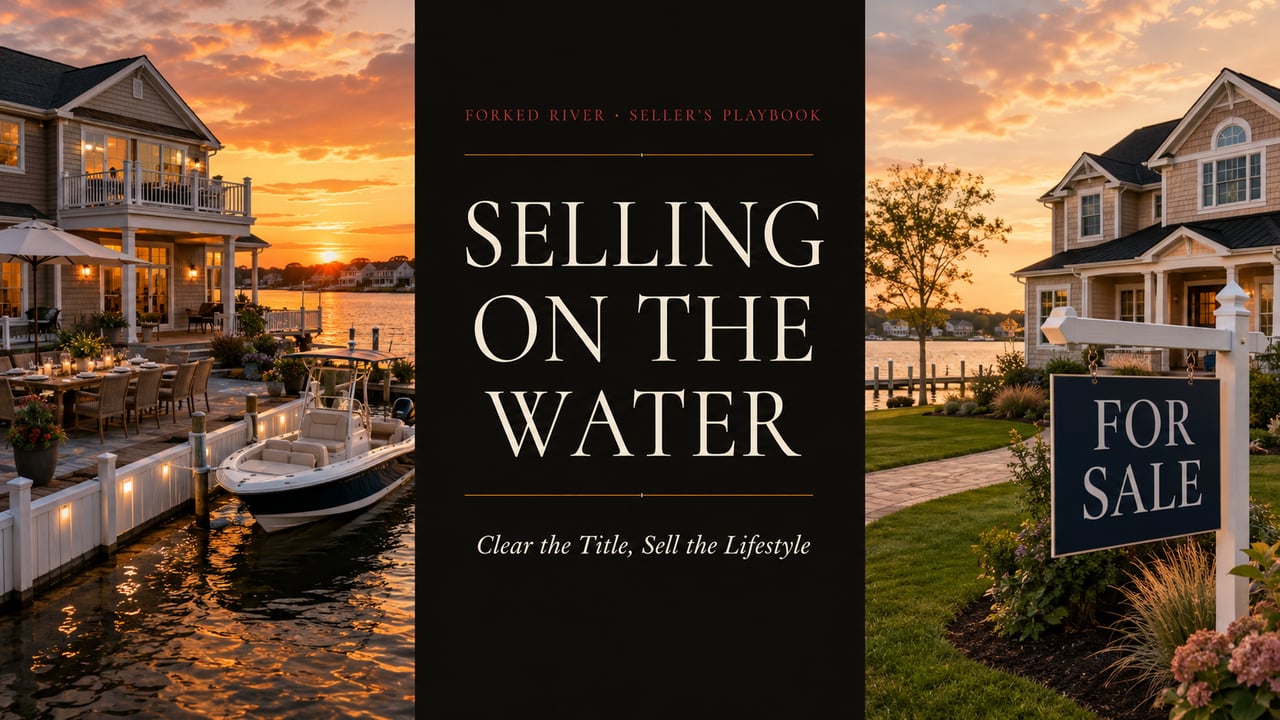
Selling a Barnegat Bay lagoon home isn't like selling any other house — the buyer is specific, the marketing is everything, and one hidden title issue can blow up your closing at the eleventh hour. Here's the seller's playbook: clear the tidelands trap before you list, prep and price the water right, and put the home in front of the New York buyer who'll pay top dollar for it.
Selling waterfront in Forked River rewards preparation and punishes surprises. Three things separate a smooth, top-dollar sale from a painful one. First, title: many Barnegat Bay lagoon properties carry a state tidelands claim that must be cleared before clean title can transfer — discover it after you're under contract and it can delay or kill the deal, so a smart seller searches before listing. Second, presentation and pricing: the bulkhead, the elevation, and the boat access are scrutinized and priced by buyers who know exactly what to look for, so the home has to be prepped and priced to that knowledgeable audience. Third, marketing: the buyer who pays the waterfront premium is often a New York or Staten Island boater who needs to be reached, not waited for — which is where cinematic marketing and a real relocation pipeline earn their keep. Get those three right and the lagoon home that intimidates other sellers becomes your strongest asset.
If our waterfront buyer's guide is about buying a lagoon home wisely, this is its mirror: how to sell one for the most money with the fewest surprises. It's written by a team that markets Forked River waterfront to the exact New York buyers who move here — and that recently sold a Forked River home for a record price per square foot. Here's the playbook.
A lagoon home doesn't sell to the same buyer, on the same timeline, as an inland ranch. The waterfront buyer is specific — frequently a boater or a second-home seeker, often coming down from New York or Staten Island with a very particular dream — and they scrutinize things a general buyer never would: how many lagoons to the open bay, the age and material of the bulkhead, the elevation and its effect on flood insurance, the depth of the water at low tide. Because of that specificity, the pool is smaller but the motivation is higher, and the marketing has to find that buyer rather than wait for foot traffic. Pace reflects it: Forked River waterfront homes have recently averaged around 57 days on market — slower than the roughly 40-day town-wide pace that blends in the faster inland market, but far quicker than the age-restricted segment. The takeaway for a seller is that waterfront is a marketing-driven, preparation-rewarded sale. Do the homework up front and price to a knowledgeable audience, and the water works for you; wing it, and the same discerning buyers who would pay a premium will find every reason to discount.
Sources: Redfin / MLS-based and 55places data, 2025–2026. Segment pace varies with pricing, condition, and the individual home; use as a planning guide, not a guarantee.
This is the single most important thing a Forked River waterfront seller can know, and most don't until it's a crisis. Under New Jersey law, the state owns in fee simple all land currently or formerly flowed by the mean high tide of a natural waterway — and Barnegat Bay and its tidal lagoons qualify. If any portion of your property sits on state-claimed tidelands (also called riparian land), that claim is a cloud on your title, whether or not you've ever heard of it. In the 17 of 21 New Jersey counties where these claims exist — Ocean County among them — title companies must run a specialized tidelands search before issuing a policy, and standard title insurance excludes the claim until it's resolved. If a claim surfaces, the seller generally has to clear it by obtaining a Riparian Grant (effectively buying that strip back from the state) or, for still-flowed areas, a Tidelands License (annual rent) — and the grant process is slow, running several months, with a cost the state sets by the claimed square footage. The nightmare scenario is discovering all this after you're under contract, when a slow state process collides with a buyer's closing date and the deal falls apart. The fix is simple and cheap by comparison: run a tidelands search before you list, so any claim is known and being resolved while the home is on the market, not after. We walk through the full mechanics — and how it fits the wider closing picture — in our New Jersey closing-cost guide. On the water in Forked River, this one step protects the whole sale.
Before you list a lagoon home, do two cheap things that prevent expensive surprises: order a tidelands search and locate (or apply for) your dock/bulkhead tidelands license or grant, and pull an elevation certificate. The first protects your title and timeline; the second is a marketing asset — a documented favorable elevation lets a buyer insure the home affordably, which widens your buyer pool and supports your price. Sellers who hand a buyer a clean tidelands result and a good elevation certificate remove the two biggest sources of waterfront cold feet before an offer is ever written.
With title handled, presentation and pricing decide the number. The bulkhead is the first thing a savvy waterfront buyer inspects — its age, material, and condition are scrutinized and priced directly into offers, so a recent vinyl bulkhead is a headline selling point worth documenting, while a tired timber one should be addressed or priced in honestly before a buyer's inspector flags it. Flood and elevation come next: New Jersey now requires sellers to disclose a property's flood history and risk, and a favorable elevation — backed by a certificate — is a genuine value driver because it lowers the buyer's insurance, a dynamic we detail in our flood-insurance guide. Then staging the lifestyle: waterfront buyers are buying a feeling, so the dock, the deck, the sightline down the lagoon, and the sunset view should be shown at their best — a boat at the dock and a set table on the deck sell the dream better than an empty bulkhead. Finally, pricing: waterfront value hinges on the specifics — boat access, frontage, elevation, condition — far more than square footage, so the comps have to be waterfront comps adjusted for those exact variables. Price it against the right, knowledgeable audience, and the home moves near its true ceiling; price it off inland or stale comps and you either leave money on the table or sit.
The waterfront premium is paid by a buyer who has to be reached. For Forked River, that buyer is disproportionately a New York or Staten Island boater trading city life for the bay — exactly the audience our cross-state pipeline and cinematic Above the Streets drone marketing are built to capture. Aerial video that shows the run down the lagoon to open bay does something a still photo can't: it sells the actual lifestyle to someone two hours north who's dreaming of it. That approach is how we sold 1011 Neosho Drive for a record price per square foot — marketing the water, not just the walls. On the cost side, plan for the New Jersey seller's line items: the state's graduated Realty Transfer Fee (paid by the seller at closing), and — on homes above $1 million, a real possibility for luxury bayfront and riverfront — the state's "mansion tax," which under New Jersey's 2025 changes shifted to the seller on a graduated scale. Add the usual attorney and transaction costs, and the difference between your sale price and your net can be meaningful at the top of the market, so build the net-proceeds picture before you set the price. Do all of it well — clean title, documented water assets, lifestyle marketing to the right buyer, eyes-open on costs — and selling Forked River waterfront becomes what it should be: the most rewarding sale on the shore.
Our Above the Streets Forked River feature is the kind of cinematic aerial storytelling that shows a New York buyer the run down the lagoon to open bay — and sells the lifestyle a still photo can't.
"The two things that sink a waterfront sale are a tidelands surprise nobody checked for and marketing that treats a lagoon home like any other listing. I've seen a state riparian claim freeze a deal that was days from closing, and I've seen gorgeous waterfront sit because it was photographed like an inland ranch. Handle the title before you list, market the water to the New York buyer who's dreaming of it, and a Forked River lagoon home doesn't just sell — it sets records. We've done it."
— Anthony Licciardello, Broker, The Prodigy Team
Every listing we take is marketed through a system built for one outcome: putting your New Jersey waterfront in front of the motivated New York families already searching for it. I'm Anthony Licciardello, Broker of The Prodigy Team — a former Director of Community Affairs in the Bloomberg Administration and a member of the Staten Island Growth Management Task Force — and the Staten-Island-to-Barnegat-Bay pipeline is one we run every week. When a Forked River lagoon home needs to reach the buyer who'll pay the premium, that reach is the difference between a median result and a record one.
Our Above the Streets cinematic drone series extends that reach — aerial storytelling that markets entire towns and waterfront homes, not just listings, with audience performance exceeding industry benchmarks for real estate media.
Anthony Licciardello · Broker, The Prodigy Team · 718-873-7345
We'll clear the tidelands question, document your water assets, price against the right comps, and market your Forked River home to the New York buyer who'll pay top dollar for it.
What is a tidelands claim, and how does it affect selling my waterfront home?
New Jersey owns land currently or formerly flowed by the mean high tide, including areas of Barnegat Bay and its lagoons. If part of your property sits on these state tidelands, it's a cloud on your title that title insurers exclude until it's resolved — usually by the seller obtaining a Riparian Grant or Tidelands License. Because the process can take months, order a tidelands search before you list so any claim is being cleared while the home is marketed, not discovered after you're under contract.
What adds the most value when selling a Forked River lagoon home?
The water-specific assets: a newer vinyl bulkhead, quick and easy boat access to the bay, deep water at the dock, and a favorable elevation (documented with a certificate, since it lowers the buyer's flood insurance). Beyond that, staging the lifestyle — the dock, the deck, the lagoon sightline — and pricing against true waterfront comps adjusted for those specifics. Waterfront value hinges on access and condition far more than square footage.
How long does it take to sell a waterfront home in Forked River?
Recent Forked River waterfront homes have averaged around 57 days on market — slower than the roughly 40-day town-wide pace (which includes the faster inland market) but far quicker than the age-restricted segment. Timeline depends heavily on pricing, condition, and how well the home is marketed to the specific waterfront buyer. Clearing title issues in advance also prevents delays once you're under contract.
What are the seller's costs when selling in New Jersey?
Sellers pay New Jersey's graduated Realty Transfer Fee at closing, plus — on homes above $1 million, which includes much of the luxury waterfront — the state's "mansion tax," which under 2025 changes shifted to the seller on a graduated scale. Add attorney fees, any tidelands grant/license costs, agreed concessions, and commission. Because these can be meaningful at the top of the market, build a net-proceeds estimate before setting your price, and confirm current figures with your attorney.
How We Sold 1011 Neosho Drive for a Record Price
The Waterfront Buyer's Guide
Flood Insurance on the Barnegat Bay Lagoons
The Forked River Neighborhood Guide
Moving to Forked River — The Relocation Guide
Tidelands/riparian mechanics per the New Jersey Department of Environmental Protection Bureau of Tidelands Management and N.J.S.A. 12:3: the State owns land currently or formerly flowed by mean high tide; claims exist in 17 of 21 counties (including Ocean); title policies exclude unresolved claims; clearing typically requires a Riparian Grant (filled tidelands) or Tidelands License (still-flowed), with grant processing commonly taking several months and cost set by the State. Seller costs reflect New Jersey's graduated Realty Transfer Fee (seller-paid) and the state's mansion-tax provisions on consideration above $1 million, which New Jersey shifted to the seller on a graduated basis under 2025 changes — confirm current rates and applicability with a New Jersey attorney. Market pace (waterfront ~57 days, town-wide ~40 days, 55+ ~241 days) per Redfin/MLS-based and 55places data, 2025–2026, and varies by home. Flood disclosure per New Jersey's seller flood-disclosure requirement. Record-sale reference is a specific Prodigy transaction and not a guarantee of results. This post is general information, not legal, tax, or financial advice; consult a New Jersey real estate attorney for your specific sale.
Prodigy Real Estate is an innovative real estate company offering high-end video production, home valuation services, purchasing, and home sales. Serving New York and New Jersey.