
Anthony Licciardello | July 28, 2026
Point Pleasant Borough
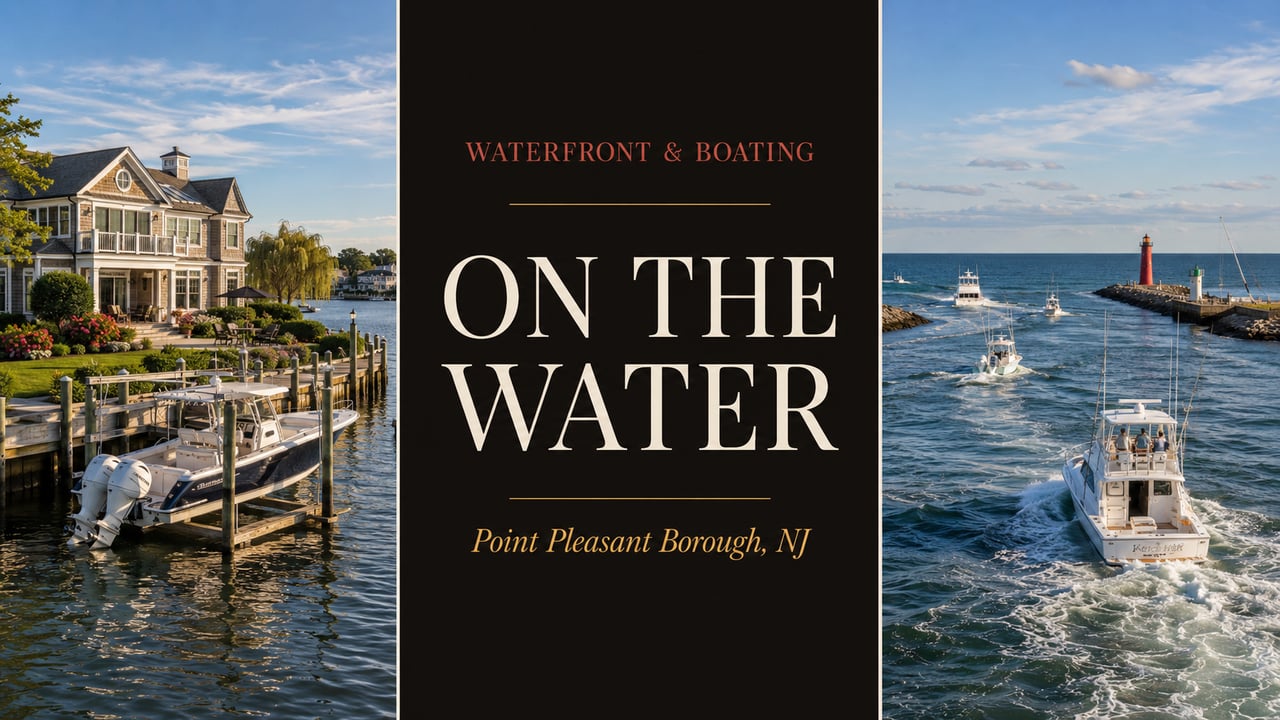
In Point Pleasant Borough, the water behind the house is the whole point. A network of lagoons, canals, and deep-water frontage on the Manasquan River — split by the Point Pleasant Canal, with the Atlantic one inlet away — makes this one of the Jersey Shore's great boating towns. But a waterfront home is only as good as the water it sits on. This is the buyer's guide to docks, depth, bulkheads, and getting your boat to open water.
Point Pleasant Borough is built for boaters. The Manasquan River, a dense network of residential lagoons and canals, and the Point Pleasant Canal — a segment of the New Jersey Intracoastal Waterway that runs right through town — give waterfront owners direct access to two very different cruising grounds: north through the Manasquan Inlet to the open Atlantic, and south down the canal to the calm of Barnegat Bay. That access is why waterfront homes here command a premium, with deep-water properties running $1.3 million to well over $2 million. But not all waterfront is equal. The single most important thing a buyer can do is verify the water — the depth at low tide against your boat's draft, the route to open water, and the condition of the bulkhead and dock — before falling for the view. Do that homework and a Point Pleasant waterfront home is one of the best boating lifestyles on the Shore.
If boating is your reason for moving to the Shore, the waterfront tier is a world of its own. This guide covers how the water works, the types of frontage, and — most important — what to check before you buy. For the town overall, see our Point Pleasant Borough relocation guide; for the pricing tiers, our lagoon-living market analysis.
The Borough sits at the meeting point of river, canal, and ocean. The Manasquan River forms its northern edge and, through the Manasquan Inlet, opens directly to the Atlantic — the same inlet that makes this a hub for sportfishing and deep-sea charters. Running north-to-south through town is the Point Pleasant Canal, a roughly 100-foot-wide, six-foot-deep (at mean low water) segment of the New Jersey Intracoastal Waterway that connects the Manasquan River to Barnegat Bay. The practical result for a homeowner: from the right dock, you can run north to the ocean or south to the bay's calmer coves.
That geography supports a genuine year-round boating culture — marinas, service yards, launch ramps, and yacht clubs line the Manasquan River, with names like Crystal Point and Clark's Landing among the well-known facilities in the area. For many Borough families, boating isn't a summer hobby; it's a way of life the town is physically organized around. If you'd rather keep your boat at a marina than maintain a private dock, that's a completely viable path here — and one worth weighing against the cost of waterfront.
"Waterfront" covers several very different things here. Lagoon and canal homes — the most common waterfront type — back onto man-made residential waterways that feed into the river or canal; they offer a private dock and a protected place to keep a boat, but depth and the route to open water vary lagoon by lagoon. Point Pleasant Canal frontage puts you directly on the Intracoastal Waterway, with its maintained channel and quick two-way access, though the busier main waterway is a different feel from a quiet lagoon. And deep-water and open-river frontage — the premium tier — offers the depth and access that larger boats need, which is why these homes command the top prices.
This is exactly why water access, not square footage, drives the top of the market. Deep-water homes with a dock or boat lift routinely run $1.3 million to over $2 million, while an interior lagoon that goes shallow at low tide sits lower. The lesson: match the frontage to your boat and how you actually use it — and confirm the specifics rather than trusting the word "waterfront" in a listing. Our market analysis breaks the pricing tiers down, and you can scan current Point Pleasant homes for sale to see the range.
This is the chapter that saves you. A waterfront home carries costs and questions an interior home never does, and the beautiful view can hide an expensive surprise. Before you write an offer, work through the essentials below with your agent, a marine contractor, and your insurer — every one of them matters, and none of them shows up in a listing photo.
Some lagoons are plenty deep; others go to just a few feet at low tide. Confirm the actual MLW depth at the dock and along the route out — and compare it to your boat's draft — before you assume you can keep the boat you want.
Check for shallow spots, dredging history, and any fixed-bridge clearances between the dock and the inlet or canal — air draft matters for larger powerboats and especially sailboats.
The bulkhead holding back the water is a major asset — and a major expense if it's failing. Get its material, age, and condition assessed; replacement can run into the tens of thousands.
Confirm the dock and any lift are sound and properly permitted, and understand what you can and can't add or expand.
In New Jersey, structures over tidal waterways can require a state tidelands (riparian) grant, lease, or license. Confirm any instrument is in place and transfers cleanly — a title and tidelands check is essential.
Waterfront almost always means a FEMA flood zone. Get the zone, an elevation certificate, and a real insurance quote — details in our flood-insurance guide.
General guidance for New Jersey tidal waterfront; specifics vary by property. Verify depth, permits, tidelands status, bulkhead condition, and flood details with qualified professionals before purchase.
The best waterfront buy depends on how you actually use a boat. If you're an offshore or inlet fisherman, prioritize deep water and a quick, unobstructed run to the Manasquan Inlet — draft and directness matter more than a picture-perfect lagoon. If you're a relaxed bay cruiser, a spot with easy southbound access down the Point Pleasant Canal to Barnegat Bay may suit you better, and you can accept a gentler, more protected setting. And if you mostly want the option to boat without the upkeep of private waterfront, a solid interior home plus a marina slip can be the smarter financial move.
Whatever your style, remember that a waterfront home is a boat decision and a real-estate decision at once. Price the dock, the depth, the bulkhead, and the flood insurance alongside the house — and you'll buy a lifestyle that holds its value and its joy. If you're still deciding between the Borough and its oceanfront neighbor, our Borough-vs-Beach comparison will help — and when you're ready, we'll walk the dock with you.
Visit a waterfront home at low tide, not just high. A lagoon that looks perfect at high water can turn to mud flats at low tide, stranding your boat for hours a day — and you'll never see it in the glossy afternoon listing photos. Ask the seller (in writing) about the depth at mean low water and any history of dredging, and if you're serious, have a marine contractor confirm it. The buyers who regret a waterfront purchase almost always skipped the low-tide visit; the ones who love theirs made it the first thing they did.
"A waterfront home in Point Pleasant is two purchases in one — the house and the water — and the water is the part buyers forget to inspect. I've stood on beautiful docks that turn to mud at low tide, and I've seen bulkheads that were a $60,000 surprise waiting to happen. None of that should scare you off; the boating life here is genuinely special. It just means we check the depth, the bulkhead, and the route to the inlet as carefully as we check the kitchen. Buy the water right, and you'll never want to leave the dock."
— Anthony Licciardello, Broker, The Prodigy Team
Guiding a New York family into a waterfront home — and knowing to check the depth, the bulkhead, and the tidelands before the view seals the deal — is exactly the local fluency a cross-border broker should bring. I'm Anthony Licciardello, Broker of The Prodigy Team — a former Bloomberg Administration Director of Community Affairs and a leading broker for cross-border New York–New Jersey transactions, bringing New York buyers to New Jersey sellers — and helping families buy the water right is work we do every week.
Our Above the Streets cinematic drone series extends that reach — aerial storytelling that markets entire towns, not just listings, with audience performance exceeding industry benchmarks for real estate media.
Anthony Licciardello · Broker, The Prodigy Team · 718-873-7345
Tell us your boat, your budget, and how you like to be on the water, and we'll find the waterfront home whose depth, bulkhead, and access actually fit — and price it all honestly.
Can you get to the ocean by boat from Point Pleasant Borough?
Yes. From the Manasquan River you reach the Atlantic through the Manasquan Inlet — a short run that makes the Borough popular for sportfishing and ocean cruising. You can also head south through the Point Pleasant Canal (part of the New Jersey Intracoastal Waterway) into Barnegat Bay for calmer water. Which direction is easier depends on your specific dock, so confirm the route and any bridge clearances for your boat.
Are the lagoons deep enough for my boat?
It varies a lot. Some lagoons and canals stay deep; others are shallow at low tide, which can limit or strand a deeper-draft boat. Always confirm the depth at mean low water at the dock and along the route to open water, and compare it to your boat's draft, before assuming a home works for your vessel. A low-tide visit and a marine contractor's check are the surest ways to know.
What extra costs come with a waterfront home here?
Beyond a higher purchase price, budget for flood insurance, bulkhead maintenance or eventual replacement (which can be a major expense), dock and boat-lift upkeep, and possibly periodic dredging. There may also be a New Jersey tidelands (riparian) grant, lease, or license associated with structures over tidal water. These are manageable costs, but they should be in your numbers from the start.
How much more do waterfront homes cost in Point Pleasant Borough?
Water access is the biggest single factor in the Borough's high end. Deep-water and prime lagoon homes with a private dock or lift commonly run $1.3 million to over $2 million, well above the town's standard-residential median in the $700,000s. The premium reflects depth, direct access, and dock infrastructure — so what you're really paying for is the quality of the water, not just the house.
Moving to Point Pleasant Borough — The Relocation Guide
Borough Real Estate & Lagoon-Living Market Analysis
Point Pleasant Borough vs. Point Pleasant Beach
Flood Zones & Insurance — The Shore Buyer's Guide
Point Pleasant Homes for Sale — Browse Current Listings
Boating and waterfront details per public and navigational sources including Waterway Guide, NOAA charts, and municipal information, for Point Pleasant Borough, Ocean County, NJ, 2024–2026. The Point Pleasant Canal is a segment of the New Jersey Intracoastal Waterway (authorized ~100-ft width, ~6-ft depth at mean low water) connecting the Manasquan River to Barnegat Bay; the Manasquan Inlet connects the Manasquan River to the Atlantic Ocean. Lagoon and canal depths vary and some are shallow at low water; fixed bridges impose air-draft limits; verify depth, dredging history, and clearances for your specific vessel. New Jersey tidal waterfront structures may require a state tidelands (riparian) grant, lease, or license. Waterfront/deep-water homes with docks commonly run ~$1.3M–$2M+, above the Borough's standard-residential median in the $700,000s. Marina names are illustrative and may fall in adjacent municipalities. All figures and conditions are point-in-time and property-specific; verify depth, bulkhead condition, permits, tidelands status, flood zone, and comparables with qualified professionals before relying. This post is general information, not financial or navigational advice.
Prodigy Real Estate is an innovative real estate company offering high-end video production, home valuation services, purchasing, and home sales. Serving New York and New Jersey.