
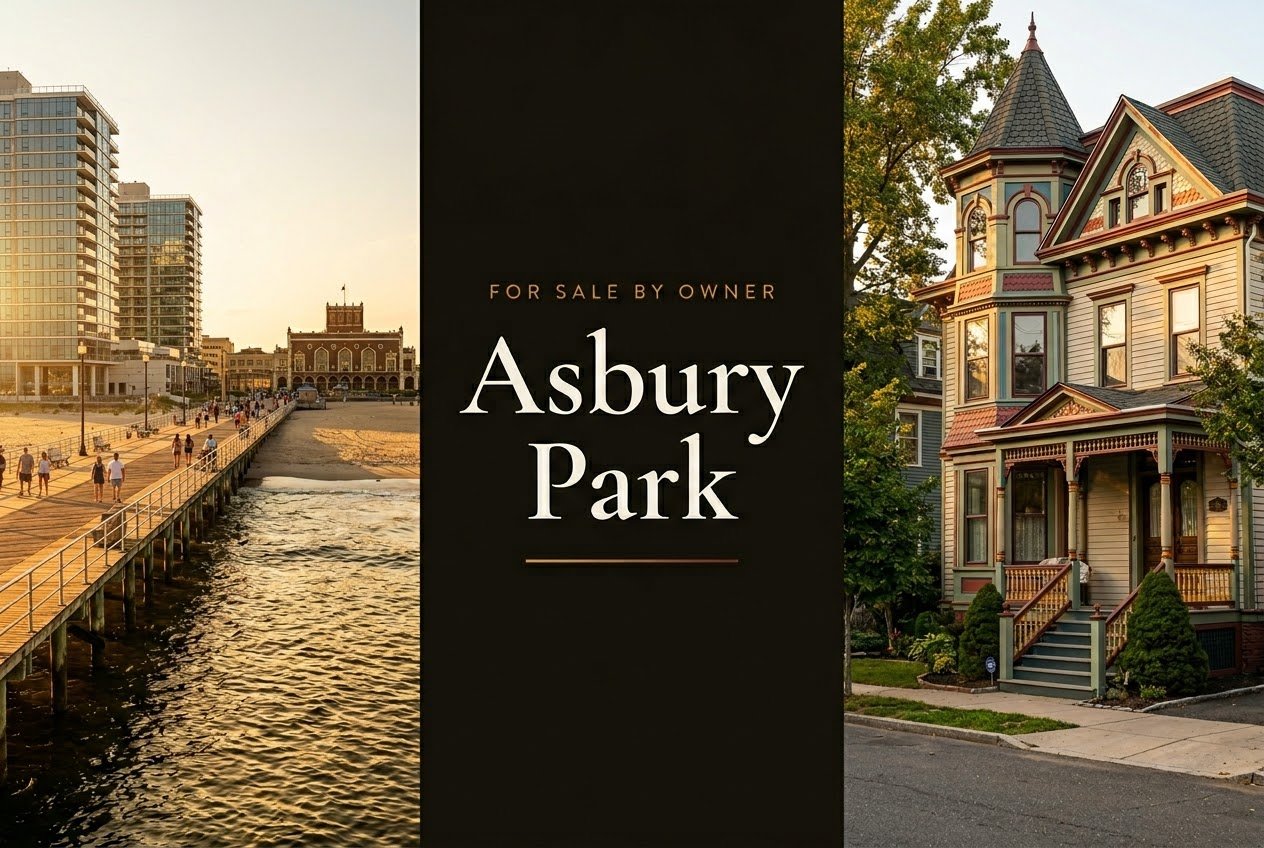

Three markets in one ZIP code
Asbury Park is a small city with an outsized range, and that range is its defining selling challenge. Within a single ZIP code sit at least three distinct markets: the beachfront and downtown condos — from entry-tier units to multimillion-dollar oceanfront penthouses — bought largely by second-home owners and investors; the restored Victorians and single-family homes of the established blocks, bought by design-driven primary residents; and the more affordable west side, where value buyers and longer-term investors look. Each is a different product, a different price logic, and a different buyer.
A FSBO seller almost inevitably collapses that complexity into one generic listing. But the pitch that lands a Manhattan weekender on an oceanfront condo is not the pitch that sells a Victorian to a young family, and neither speaks to a cash investor running rental math. Selling well in Asbury Park starts with knowing exactly which of the three markets your home belongs to — and then reaching that specific buyer, in their language, where they actually look.
A condo, a Victorian, and a west-side single-family attract three different buyers with three different motivations. A one-size listing speaks clearly to none of them — and in Asbury Park, speaking to the wrong buyer is how a home lingers and discounts.
Condo vs. single-family pricing
Pricing a condo and pricing a single-family home in Asbury Park are two different disciplines, and conflating them is a classic FSBO error. A condo’s value turns on the specific building — its HOA fees and reserves, its PILOT tax arrangement, its rental and short-term-rental rules, its floor and view, and how its amenities compare to the building two blocks over. Two units of the same size in different buildings can be worth strikingly different sums. A single-family home, by contrast, prices on lot, condition, period detail, and proximity to the beach and downtown.
An automated estimate handles neither well, and handles condos especially badly — it cannot read a building’s financials or its rental policy. Pricing correctly means knowing what comparable units in your building and tier have actually closed at, or what genuinely comparable homes on the established blocks have sold for — not a city-wide average that blends a studio and an oceanfront penthouse. In a market where time-on-market has normalized to weeks rather than days, the launch price decides whether you catch the wave or sit through it.
Condos price building-by-building on HOA, PILOT, and rental rules; single-families price on lot and condition. A city-wide average captures neither — and on a condo, an automated estimate is essentially blind to the financials that set the value.
The investor and second-home buyer
Asbury Park draws a meaningful share of buyers who are not buying a primary home at all. Some are second-home buyers — New Yorkers wanting a beach base within reach of the city. Others are investors, drawn by the town’s sustained appreciation and strong rental demand, who evaluate a purchase the way they’d evaluate any asset: by the numbers. These buyers ask different questions. What are the HOA fees and the PILOT schedule? What does the unit rent for, seasonally and annually? What are the building’s short-term-rental rules? What is the realistic cap rate?
A FSBO listing almost never answers those questions, because most owner-sellers don’t think in them. Yet for the investor and second-home buyer — often the very buyers willing to move quickly and pay strongly — those answers are the listing. A presentation that anticipates and addresses the investment case reaches a buyer pool a generic “charming beach condo” description never will. Reaching and convincing that buyer is a specialized task, not a sign-in-the-window one.
Investors and second-home buyers decide on rental numbers, HOA and PILOT costs, and rules a FSBO listing rarely addresses. If the listing can’t answer the investment question, the buyer most ready to act simply moves on.
The flat-fee mirage
A flat-fee MLS service is honest about what it does: for a few hundred dollars it enters your home into the MLS and syndicates it to the portals. If your only goal is to appear in the search results, that is a legitimate, low-cost path and deserves a fair description rather than a dismissal.
What the flat fee does not buy is the work this particular market demands: pricing a condo against its building’s financials or a Victorian against its block, presenting the home to the right one of three buyer types, packaging the investment case for investors and second-home buyers, and reaching the out-of-area buyer who isn’t yet searching Asbury Park. The flat fee assumes a single, self-directed buyer is already looking at your exact listing. In a three-market town, that assumption fails more often than it holds.
Syndication treats a beach condo, a Victorian, and an investment unit identically. But each needs a different pitch to a different buyer — and a flat fee delivers one generic listing to all of them.
In a multi-buyer market, generic distribution is the most expensive kind of cheap.
Why two agents in the same office are not the same product
Here is the part of the industry rarely said out loud, and it matters as much in Asbury Park as anywhere: real estate agents are independent contractors. An agent under a national franchise is not an employee delivering a standardized service. They are an independent business owner who pays the brokerage for affiliation and decides, personally and out of their own pocket, how much to invest in marketing your home — and whether they understand condos, investors, or only single-families.
So the recognizable logo guarantees almost nothing. One agent lists your condo with a few phone photos and no mention of the building’s financials. Another agent at the same office produces cinematic video, packages the rental and PILOT details for investors, and runs a campaign aimed at the right buyer type. Same sign. Two entirely different products. When you interview an agent in Asbury Park, you are hiring that one contractor’s market-specific expertise — not the brand.
Don’t hire a logo. Ask the individual: do you know my building or block, my buyer type, and how to package this for an investor if that’s who it’s for? In a three-market town, that knowledge is the whole job.
The Prodigy Team is built deliberately against that randomness. Rather than depending on whatever a single contractor decides to fund or happens to know, the team runs shared, in-house infrastructure — cinematic production, distribution, and a relocation and investor network — behind every listing, with market-specific knowledge of condos, Victorians, and the west side built in. The standard doesn’t drop because the agent changed.
Matching home to buyer — and Instagram’s one-day shelf life
The whole task in Asbury Park is matching each property to the right one of three buyer types and reaching them where they look. The Prodigy Team builds every listing around that match, then carries it through infrastructure a single transaction’s budget cannot replicate.
A capability we own — so we can shoot the oceanfront view a second-home buyer dreams of, or the period detail of a Victorian, with the right emphasis for the right buyer.
Our branded series, Above the Streets, sells the Asbury Park lifestyle — the boardwalk, the music, the restaurant culture — to second-home and relocating buyers long before they ever contact an agent.
Pages for Asbury Park, Ocean Grove, and Bradley Beach rank for the condo, investment, and beach-town searches each buyer type runs — and keep ranking after a post is gone.
An owned audience that includes both lifestyle relocators and investors — so a condo or a Victorian reaches warm, self-selected demand matched to the property, not a cold feed.
Set that against where most FSBO marketing lives and dies: a single Instagram post. Its working shelf life is roughly a day — the feed surfaces it, a slice of your followers see it, and within twenty-four hours the algorithm has moved on. A story is gone in twenty-four hours by design. Boosting it only buys reach to a broad local audience, not the New York second-home buyer or the out-of-area investor.
Assets that compound behave differently. A cinematic tour is searchable in two years. An SEO page accrues authority every month. A network grows. The Prodigy difference isn’t posting more often — it’s building reach that can be aimed at the right buyer and keeps working long after the feed has buried the post.
| Capability | FSBO alone | Flat-fee MLS | The Prodigy Team |
|---|---|---|---|
| MLS & portal syndication | — | ✓ | ✓ |
| Condo building & PILOT-aware pricing | — | — | ✓ |
| In-house cinematic film & drone | — | — | ✓ |
| Investor / second-home buyer packaging | — | — | ✓ |
| Evergreen YouTube & SEO presence | — | — | ✓ |
| Negotiation & transaction management | You | You | Team |
| Who carries the cost & risk | You | You | The Team |
What makes an Asbury Park home stop a New York scroll
Asbury Park sells a lifestyle as much as a home — and the right details depend on which buyer you’re reaching. These are the specifics that make a New York buyer stop scrolling, and what a listing here has to lead with:
The boardwalk & the beach. The oceanfront, the Stone Pony, the Paramount, the restaurant and bar scene — this is the culture a second-home buyer is buying. Lead with the lifestyle for that buyer.
The numbers, for investors. Rental performance, HOA and PILOT details, and short-term-rental rules. For the investor buyer, this is the listing — put it front and center.
The architecture, for owners. Restored Victorians and design-forward renovations sell to a primary buyer who cares about period detail and craftsmanship. Photograph it like the design object it is.
Year-round, not seasonal. Unlike many shore towns, Asbury Park lives twelve months a year. For a buyer weighing a true beach base versus a summer-only town, that distinction is a major selling point.
The train. NJ Transit service keeps Asbury Park reachable from the city — the line that turns a weekend place into a viable second home or even a commute. Make the connection explicit.
The questions to ask before you sign — or go it alone
In a three-market town, the wrong approach reaches the wrong buyer and costs you weeks and dollars. Interview the marketing investment, not the personality — whether you’re weighing FSBO, a flat fee, or an agent, ask the same hard questions and judge by the answers.
- Which of the three Asbury Park markets is my home in, and how will it be priced for that — building, block, or investment math?
- If my buyer is an investor or second-home buyer, how will the rental, HOA, and PILOT case be packaged?
- How will the right buyer type — often from out of area — actually be targeted and reached?
- What happens to my marketing after week one, when the social posts go quiet?
- Who personally absorbs the cost and risk of all of this — me, or the team?
FSBO answers all five with “you.” A flat fee answers them with “you, plus syndication.” The Prodigy Team answers every one with buyer-matched expertise and infrastructure you don’t have to build, fund, or maintain yourself — built for a town that is three markets at once.
Can I sell my Asbury Park home or condo for sale by owner?
Yes — FSBO is legal and viable. The harder problem is that Asbury Park is really three markets — condos, restored single-families, and the west side — each with a different buyer. Pricing your specific property type and reaching the right buyer are where a self-sale most often goes wrong.
Why is pricing a condo different from pricing a house here?
A condo’s value depends heavily on its specific building — HOA fees and reserves, its PILOT tax arrangement, rental and short-term-rental rules, floor, and view — so two similar-sized units can be worth very different amounts. A single-family home prices on lot, condition, and period detail instead. A city-wide average reflects neither accurately.
How do I sell to an investor or second-home buyer?
By answering the questions they actually ask: rental performance, HOA and PILOT costs, short-term-rental rules, and the realistic return. A listing that packages the investment case reaches buyers who move quickly and pay strongly — a generic “charming beach condo” description does not.
Why do two agents at the same brokerage market my home differently?
Because agents are independent contractors, not employees. Each personally decides how much to invest and whether they understand condos, investors, or only single-families. The brokerage’s name guarantees little about the production or market-specific expertise you receive. Hire the individual’s knowledge, not the sign.
How does The Prodigy Team match my home to the right buyer?
Through owned infrastructure rather than one-off posts: in-house 4K drone and cinematic production, the evergreen Above the Streets YouTube series, a hyperlocal SEO engine, and a large NY/NJ/FL relocation and investor network — a sustained pipeline that presents each property to the buyer type most likely to value it.