
Anthony Licciardello | April 10, 2026
Eltingville, Staten Island
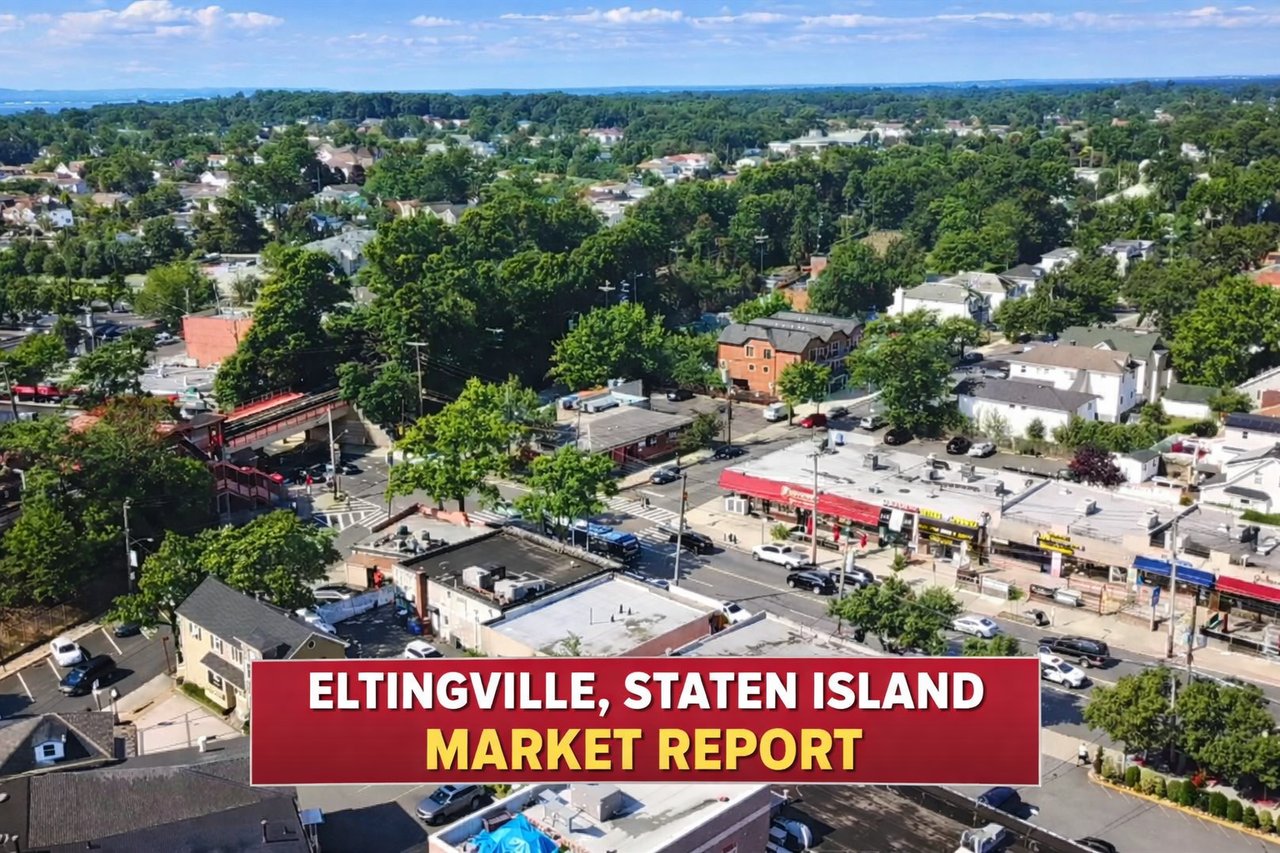
The mortgage math, the transit advantage, and the lifestyle fundamentals driving one of Staten Island's most stable real estate markets
The numbers in Eltingville tell a clear story — rising prices, tight inventory, a steady flow of renovation permits, homes selling fast. But numbers rarely explain themselves. To understand why this South Shore neighborhood keeps performing, you have to look at what's actually happening on the ground: who lives here, why they're staying, what they're doing to their homes, and what keeps drawing new buyers in despite limited supply.
Four forces are driving this market right now. Each one reinforces the others. Together, they explain why Eltingville is less of a hot market and more of a structurally sound one — the kind that holds value through cycles rather than just riding them.
The surge in renovation permits across Eltingville isn't just about changing tastes or growing families outgrowing their space — though both are factors. A significant part of it comes down to pure mortgage math, and understanding that math explains a lot about where this market is headed.
In early 2026, 30-year fixed mortgage rates are sitting in the low 6% range. That sounds reasonable in a historical context, but it doesn't feel that way to Eltingville homeowners who locked in at 3% or 4% in 2020 and 2021. For those owners, selling means giving up a rate they will almost certainly never see again. Taking on a new mortgage at today's rates — on a larger home at today's prices — could mean several hundred dollars more per month in carrying costs, even if they're buying a similar property.
Locked-In Rate (2020–2021)
3–4%
Many current Eltingville owners are sitting on these rates. Selling means surrendering them permanently.
Current Market Rate (2026)
Low 6%
The cost of trading up. For most owners, leveraging equity to renovate makes more financial sense.
The result is a rational decision that thousands of Eltingville households are making simultaneously: stay put and invest in the home you already have. Pull a renovation loan. Tap into the equity you've built — and in Eltingville, that equity is substantial. Rather than trade up, expand in place.
This "stay and upgrade" mentality has a direct effect on the market. Homes that would otherwise be listed stay off the market, keeping inventory at roughly 2.6 months of supply. At the same time, the renovations and additions being built into those homes raise their value — and lift the comps for everyone else on the block. It's a dynamic that tightens supply and pushes prices upward simultaneously.
"Trading up in this rate environment means abandoning a 3% mortgage to take on a 6% one. For most Eltingville homeowners, the math points to one direction: renovate, don't relocate."
Staten Island real estate and Manhattan commute times are inseparable. Price a property without accounting for how long it takes to get to work, and you've priced it wrong. By that measure, Eltingville holds a genuine structural advantage over most of the South Shore.
The Eltingville Transit Center, anchored at Richmond Avenue and Arthur Kill Road, is one of the most important pieces of infrastructure on Staten Island for daily commuters. The facility is a large park-and-ride hub serving an extensive network of express and local buses — the SIM1C, SIM4, SIM8, and SIM31 among them — providing direct routes into Midtown and Lower Manhattan. For residents who prefer the railway, the Eltingville station on the Staten Island Railway offers a reliable connection to the St. George terminal, where the Staten Island Ferry picks up for the trip across the harbor.
A 60 to 75 minute commute from the South Shore to Manhattan is not fast — but the variety and reliability of options at Eltingville is what sets it apart. City professionals who want a house with a driveway, a yard, and a school district rather than an apartment have a legitimate path to work from here without the unpredictability that plagues less transit-connected neighborhoods. That reliability is priced into Eltingville real estate, and it's a durable premium.
Eltingville offers something genuinely rare in New York City: the feel of a suburb with the infrastructure of a city. Residents get NYPD, FDNY, and sanitation services while living on quiet tree-lined streets with driveways, backyards, and front porches. That's not a marketing line — it's what defines the neighborhood's appeal to every buyer demographic currently active in the market.
Schools. Families don't move to Eltingville by accident. P.S. 42, The Eltingville School, features a Gifted and Talented program that draws serious attention from parents navigating NYC's school system. Add access to quality middle schools and proximity to Tottenville High School, and you have a public school pathway that holds real weight in a buyer's decision-making process.
Green space. Eltingville is unusually well-positioned for a New York City neighborhood. The Staten Island Greenbelt — over 2,800 acres of protected forest and trails — sits to the north. Blue Heron Park Preserve is to the south. The Raritan Bay shoreline is accessible to residents who want it. For a neighborhood inside city limits, the access to nature here is exceptional and directly contributes to why families stay long-term.
Homeownership Rate
81%+
Owner-occupied households
Protected Green Space
2,800+ acres
Staten Island Greenbelt nearby
Single-Family Homes
40%+
Of total housing stock
Homeownership culture. Over 81% of Eltingville households are owner-occupied. That number matters more than it might seem. High owner-occupancy rates correlate directly with property maintenance standards, civic engagement, and long-term neighborhood stability. Residents who own their homes have financial skin in the game. They maintain their properties, they show up to community board meetings, and they stay for decades. That's what creates the low-volatility, steadily appreciating market that the data consistently shows here.
More than 40% of Eltingville's housing units are detached single-family homes, the majority built during the suburban expansion of the 1950s through 1970s. High ranches, raised ranches, split-levels, and cape cods dominate the streetscape — solidly built structures on generous lots, products of an era when land was more available and homes were designed for families who intended to stay a long time.
These are the exact properties fueling the current renovation wave. Their bones are good — the structures hold up — but their layouts, kitchens, and systems haven't kept pace with what buyers expect in 2026. That gap between structural soundness and cosmetic age is where the opportunity lives. An ALT-1 expansion or a full ALT-2 modernization on a 1960s high ranch in Eltingville is not just an upgrade — it's an asset repositioning. The before and after aren't the same home in the market's eyes, and the price difference reflects that.
"An unrenovated mid-century home on a good Eltingville block isn't a consolation prize — it's a forced-appreciation opportunity sitting on a foundation that was built to last."
For buyers who can close on an original-condition home in this neighborhood, the math on a targeted renovation loan is compelling right now. The comps from renovated comparable properties show what the ceiling looks like, and the spread between original condition and updated is wide enough that disciplined investment returns real money on resale. That dynamic doesn't persist forever — as more of the housing stock gets modernized, the baseline shifts upward and the arbitrage narrows. The window is open right now.
Eltingville's market isn't driven by hype or a single trend. It's held up by four interlocking fundamentals: homeowners who are financially incentivized to stay and improve, transit infrastructure that makes city employment accessible, a lifestyle package that genuinely competes with traditional suburbs, and a housing stock that still offers real upside for buyers who know what they're looking at.
Markets built on that kind of foundation don't move fast in either direction. They grind upward slowly, steadily, and reliably. That's not a weakness — it's exactly what long-term buyers and sellers should want from a neighborhood. For a broader look at how Staten Island's South Shore markets compare, see our Staten Island seller's guide, and our Great Kills market update for a look at how the same renovation dynamics are playing out one neighborhood over.
Buying or Selling in Eltingville?
Prodigy works with buyers and sellers across Staten Island's South Shore markets. Whether you're targeting an original-condition home with renovation upside or positioning an updated property for maximum return, we can help you navigate the numbers. Let's talk.
Connect With ProdigyProdigy Real Estate is an innovative real estate company offering high-end video production, home valuation services, purchasing, and home sales. Serving New York and New Jersey.