
Anthony Licciardello | June 10, 2026
Berkeley Heights, NJ
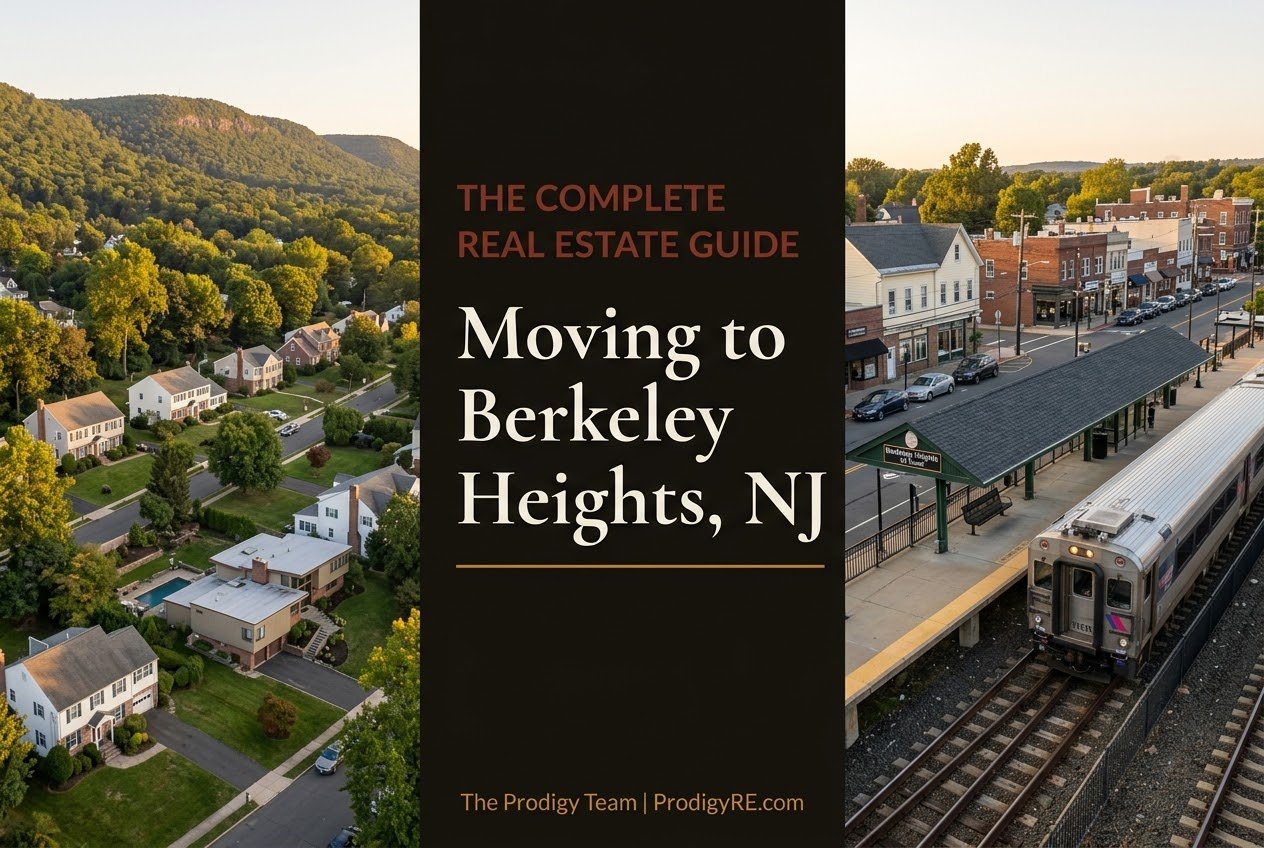
Thinking of moving to Berkeley Heights? It offers one of Union County’s lowest effective tax rates, a tightly controlled approach to growth, and a commute that rewards the buyers who understand it. Here’s how the real estate market actually works.
Berkeley Heights is a Union County township that competes on fundamentals rather than flash: one of the area’s lowest effective property-tax rates, strong schools, a deliberately restrained approach to development, and rail access to both Hoboken and Manhattan. The market is tight and fast, with limited inventory and firm pricing. Buying well here means understanding three things most shoppers underestimate — the real commute (a Gladstone Branch story, not a one-seat ride), the tax advantage that quietly widens your budget, and a teardown trend that’s reshaping the older housing stock. This guide walks all three and points you to the deeper pieces on each.
Berkeley Heights has always played it close to the vest — no flashy announcements, no sweeping rezoning, no developer land grabs. What it has instead is a housing market that quietly outperforms, anchored by low effective taxes, strong schools, and a township that knows exactly what it wants. For a buyer or seller, that restraint is the whole story: it’s what keeps the market stable and competitive at the same time, where values climb steadily and rarely give much back.
Whether you’re moving to Berkeley Heights from New York City or trading up within Union County, this guide is your map to the market. It connects the pieces — the numbers, the tax edge, the genuine commute picture, the schools, and the slow reshaping of the housing stock — and links out to the deeper posts on each, plus to neighboring Union County towns where it helps you compare.
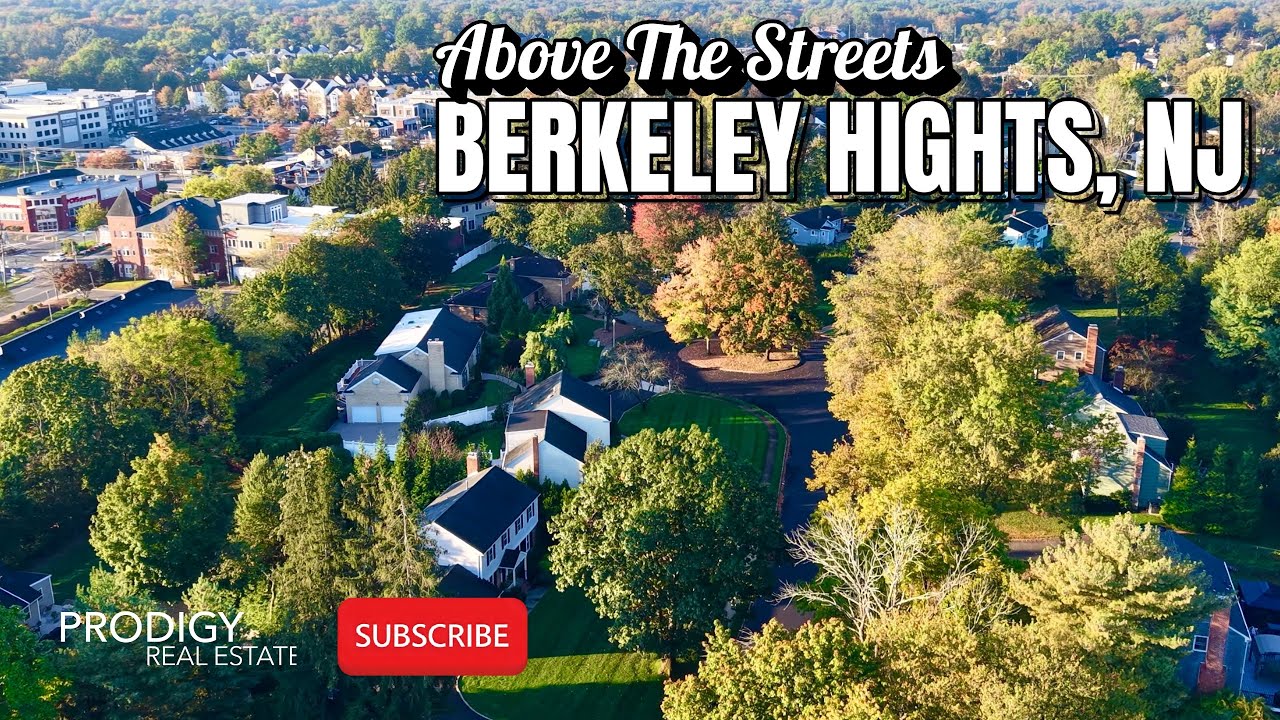
Figures are directional and reflect recent reporting; Berkeley Heights’ small monthly sales volume makes single-month numbers move. See the market-trends and property-tax guides for full detail and dates.
Berkeley Heights is a suburban township in the western corner of Union County, bordered by the Watchung Reservation’s forested ridge and sharing its commuter identity with neighbors New Providence and Summit. It’s predominantly single-family and residential by deliberate design — the township has consistently prioritized single-family zoning over apartment-style or mixed-use density, channeling what change there is into subtle commercial improvements along the Springfield Avenue corridor rather than wholesale growth.
The result is a town with a stable, mature character: tree-lined streets, colonials and mid-century homes on generous lots, and a downtown that improves at the edges without losing its scale. That stability is a feature for buyers seeking a long-term family home and an asset for sellers, because the scarcity of dramatic change keeps demand — and pricing — consistent.
Looking for homes on the market now? Our Berkeley Heights real estate page has current listings; this guide covers the how and why behind them.
By the numbers, Berkeley Heights is one of the tighter markets in Union County. The recent median sale price sits around $915,000, inventory runs lean at roughly 1.3 to 1.5 months of supply, and well-positioned homes move in about 13 to 19 days — often with sale-to-list ratios above 100%. Homes that check the right boxes on condition, location, and layout still attract multiple offers; buyers are more calculated than in the frenzy years, but hesitation remains rare when quality inventory appears.
This is, in other words, a steady-climb market rather than a boom-and-bust one. The scarcity of listings and the depth of commuter demand keep prices firm without the wild swings of flashier towns. For the full breakdown of prices, inventory, and notable sales, the dedicated market-trends report goes deeper than this overview.
Is Berkeley Heights a buyer’s or seller’s market?
As of 2026 it leans to sellers — tight inventory (~1.3–1.5 months), fast sales (13–19 days), and sale-to-list ratios above 100%. But buyers are calculated, and overpriced or poorly presented homes still sit. It’s a steady-climb market that rewards accurate pricing rather than a frenzy that bids up any listing.
Here is Berkeley Heights’ quiet edge: it carries one of the lowest effective property-tax rates in Union County — an effective rate around 1.82%. In a state and county where property taxes are a defining cost of ownership, that relative advantage matters more than buyers often realize. A lower effective rate means more of your monthly budget goes to the home and less to the tax bill, which effectively widens your buying power compared with a higher-taxed neighbor at the same price.
It’s a subtle but real reason demand here stays firm: value-conscious commuter-belt buyers comparing towns notice the tax line. The dedicated property-tax guide breaks down the rates, the equalization ratio, and how the bill is actually built — essential reading before you compare Berkeley Heights against Summit, Westfield, or Scotch Plains on total cost of ownership.
The tax line is the quiet tiebreaker. When two commuter towns offer similar homes, the lower effective rate effectively hands the buyer extra budget every single month — and Berkeley Heights wins that comparison more often than people expect.

Your home is worth more to the right buyer — and we’ve built the pipeline that finds them.
Most Berkeley Heights demand comes from New York — buyers trading a city apartment for a low-tax, strong-school commuter town. The Prodigy Team puts your listing directly in front of that audience through plain-English market guides, cinematic property marketing made for buyers shopping from a distance, and a 25,000-member relocation community. Reaching the buyer willing to pay the most is the difference between a good sale and your best one. It starts with knowing your number.
This is where an honest guide earns its keep. Berkeley Heights is served by NJ Transit’s Gladstone Branch of the Morris & Essex Lines, with the Berkeley Heights station on Sherman Avenue and the nearby Murray Hill station just over the New Providence line. But the Gladstone Branch is not Chatham’s one-seat Midtown Direct ride. It’s a single-tracked branch where most trains run to Hoboken, with only a small number of direct peak-hour trips to New York Penn Station; the common pattern is to ride to Summit and transfer to a Midtown Direct train.
That means your real commute has options, and which one you choose shapes daily life: the Summit transfer to Midtown, a direct peak train if your hours line up, the Hoboken route with onward PATH or ferry, or the Lakeland bus to the Port Authority. None is bad — but a buyer who assumes a Chatham-style direct ride will be surprised, and a buyer who maps their actual route picks the right home and station. Because the branch is a notch less convenient than the main line, it’s also part of why Berkeley Heights can offer relative value versus pricier one-seat-ride towns.
Don’t buy on a headline commute time without checking the actual schedule for your hours. The number of direct New York trains is limited, station parking runs on permits with their own rules, and a Summit transfer adds time. Map your real door-to-desk route — train, transfer, and parking — before you choose a home or a station.
The full commute breakdown — stations, the Summit transfer, direct trains, bus and ferry options, and parking — has its own guide.
As in most desirable commuter suburbs, the school district is a foundation under home values in Berkeley Heights. Strong, well-regarded public schools are a primary draw for the family buyers who make up much of the demand, and that demand puts a durable floor under prices — families will stretch and compete to be in a district they trust, and they hold those homes for the school years, tightening supply further.
The practical takeaway for buyers and sellers alike is that the schools aren’t a side detail; they’re part of the asset. A separate guide examines how the district shapes values across the township — the schools-as-price-floor dynamic in detail.
Do Berkeley Heights schools affect home values?
Strongly. A well-regarded district is a primary draw for the family buyers who drive demand here, and they compete — and hold — for homes in a district they trust. That puts a durable floor under prices and tightens supply, making the schools part of the asset rather than a side detail.
A dedicated piece covers the school district and its effect on home values.
Berkeley Heights isn’t chasing growth — it’s filtering it. There’s little appetite for large-scale density, but a quieter, highly intentional kind of change is underway: builders selectively targeting older ranches and split-levels from the 1950s through the 1970s, then expanding or rebuilding them. Over the past year, roughly 18% of homes closing above $900,000 involved new construction or major renovation — a notable uptick for a traditionally conservative town — with most new builds trading between $1.1 million and $1.6 million, premium lots pushing beyond.
This is the same land-vs-improvement logic reshaping other high-value New Jersey suburbs, applied with Berkeley Heights’ characteristic restraint: builders chase value on established lots rather than volume. For sellers of older homes, it shapes whether to renovate or sell to a builder; for buyers, it changes what you’re competing for. A dedicated guide works through the economics.
When an older Berkeley Heights ranch comes up on a good lot, I’m already thinking about who the buyer is — a family who’ll renovate, or a builder who’ll rebuild. That answer changes the pricing and whether a seller should spend a dollar on updates. In a town that filters growth this carefully, reading the lot correctly is half the deal.
The teardown-and-new-construction economics get a full breakdown of their own.
In a tight, fast, disciplined market, both sides reward preparation. Buyers should come pre-approved and clear on their real commute route, ready to move decisively when quality inventory appears — and should weigh the tax advantage into total cost of ownership when comparing Berkeley Heights against neighboring towns. Sellers benefit from the scarcity, but the win still comes from accurate pricing on true comparables and presentation that reaches the commuter-belt and relocating buyer pool, not from chasing the highest headline number into a market that prices precisely.
That reach is where the right representation earns its place. The Prodigy Team brings serious buyers to Union County — from New York City and the surrounding metro — through plain-English guides like this one, cinematic property marketing built for relocating buyers shopping from a distance, and a large relocation-and-lifestyle community. For a seller, that means your home reaches the people actually looking to move here; for a buyer, a clear-eyed read on price, commute, taxes, and schools before you commit.
Considering selling on your own? See the honest look at for sale by owner in Berkeley Heights. Comparing towns? The neighboring guides to Berkeley Heights taxes and nearby Summit, Westfield, and Scotch Plains help you weigh the trade-offs.
| Factor | The Berkeley Heights read |
|---|---|
| Taxes | Among Union County’s lowest effective rates (~1.82%) — a quiet budget-widener |
| Commute | Gladstone Branch — mostly via Summit transfer or Hoboken; limited direct Penn trains |
| Schools | Strong district; a durable floor under home values |
| Inventory | Tight (~1.3–1.5 months); fast sales, often above ask |
| Development | Filtered, not chased — selective teardowns of 1950s–70s homes |
| Character | Stable, single-family, restrained growth — steady values over swings |
A qualitative summary of the sections above. Confirm current figures and your specific commute and comps before acting.
How much do homes cost in Berkeley Heights, NJ?
The recent median sale price is around $915,000, with newly built or fully renovated homes generally trading between $1.1 million and $1.6 million and premium lots beyond. Inventory is tight (roughly 1.3–1.5 months) and homes sell fast — about 13 to 19 days — often above asking.
Why are Berkeley Heights property taxes considered low?
Berkeley Heights carries one of the lowest effective property-tax rates in Union County — an effective rate around 1.82%. In a high-tax state, that relative advantage effectively widens a buyer’s budget compared with higher-taxed neighbors at the same price, which helps keep demand firm.
How is the train commute from Berkeley Heights to NYC?
Berkeley Heights is on NJ Transit’s Gladstone Branch, with Berkeley Heights and Murray Hill stations. Most trains run to Hoboken with only limited direct peak trips to NY Penn; commonly riders transfer at Summit to a Midtown Direct train. A Lakeland bus and a Hoboken/PATH/ferry route are alternatives. Map your specific schedule before relying on a single headline time.
What is Berkeley Heights known for?
A stable, family-oriented Union County township with strong schools, one of the county’s lowest effective tax rates, a deliberately restrained approach to development, and commuter rail access toward New York and Hoboken. It’s prized for steady, durable home values rather than dramatic swings.
Anthony Licciardello
Broker of The Prodigy Team and a licensed real estate broker in New Jersey and New York, serving Union County and the New York–New Jersey commuter corridor. A former Director of Community Affairs in the Bloomberg Administration and member of the Staten Island Growth Management Task Force, Anthony helps buyers and sellers read price, taxes, commute, and schools before they commit. 718-873-7345
Buy the fundamentals — taxes, schools, and the real commute.
Whether you’re buying in Berkeley Heights or selling here, The Prodigy Team prices on true comparable sales and brings relocating buyers to Union County from across the New York metro. Ready to see what’s available? Browse current listings on our Berkeley Heights real estate page.
Start the Conversation →Prodigy Real Estate is an innovative real estate company offering high-end video production, home valuation services, purchasing, and home sales. Serving New York and New Jersey.