
June 2, 2026
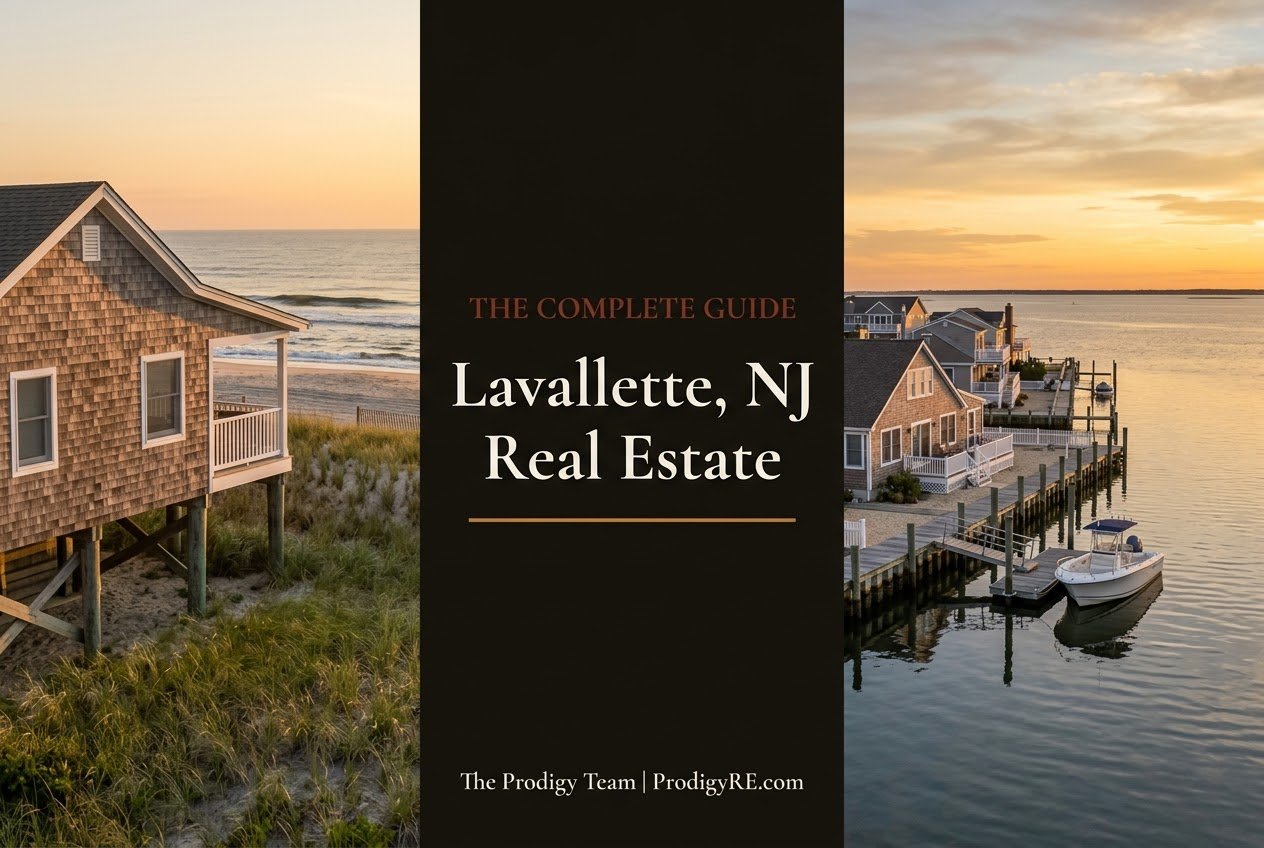
A mile-plus of ocean beach, no commercial boardwalk, and a market where roughly two-thirds of the homes sit empty all winter. Here’s how Lavallette’s shore real estate actually works — before you buy a place at the beach.
Lavallette is a small barrier-island borough on the Barnegat Peninsula — about 1.2 square miles, a year-round population around 2,000, and a housing stock that’s mostly second homes and summer rentals. Buying here isn’t a commuter-suburb decision; it’s a shore decision, governed by three things most inland buyers underestimate: which side of Route 35 you’re on (ocean or bay), what flood zone the home sits in, and how the property performs as a seasonal asset. This guide walks all three, reconciles the conflicting price data, and frames what it really costs to own at this beach.
Lavallette sits on a narrow strip of barrier island between the Atlantic Ocean and Barnegat Bay, just south of Mantoloking on the Barnegat Peninsula. It is, by design, a quiet beach town: over a mile of ocean beaches with no commercial boardwalk, a residential character its residents guard closely, and a rhythm that swells every summer and empties every winter. For a buyer used to mainland real estate, almost everything that matters here is different — what drives value, what it costs to insure, and who the next buyer will be.
That difference is the reason this guide exists. A shore home is part lifestyle, part asset, and part calculated risk on a piece of land the ocean has reached before. Understanding all three — and reading the often-contradictory market data honestly — is how you buy well here rather than buy on vacation emotion and regret it at renewal time.
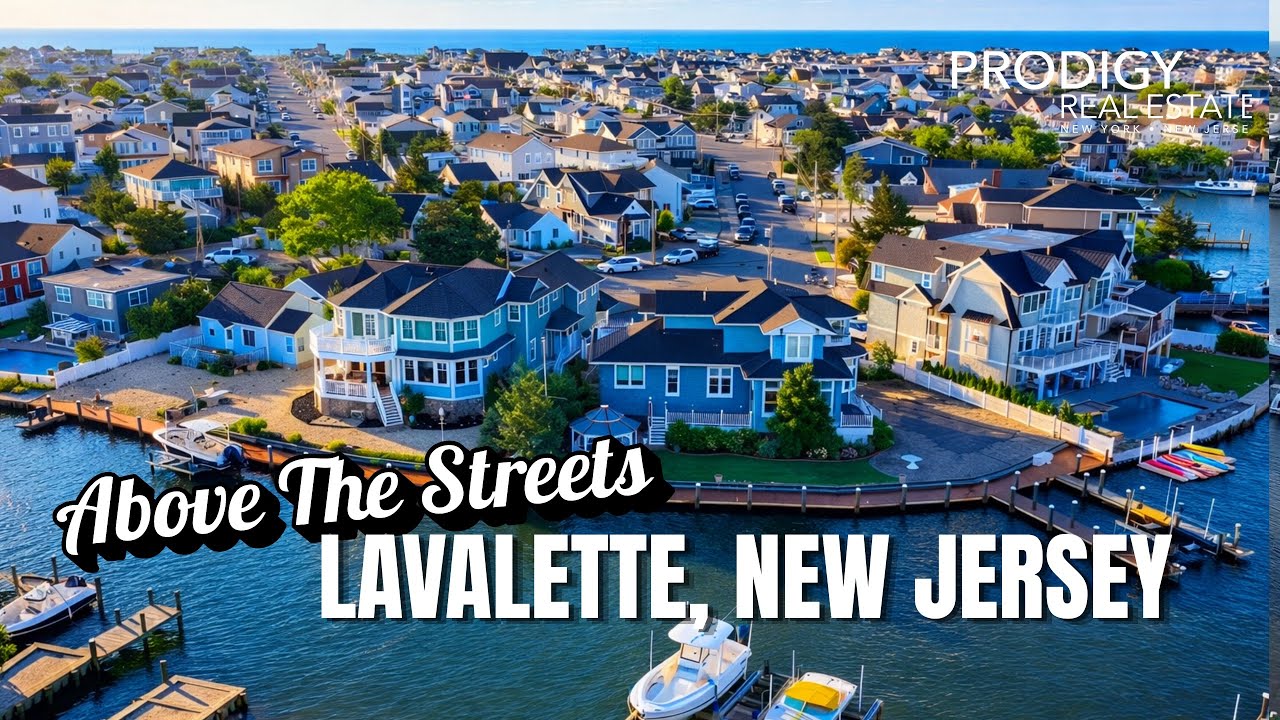
The first thing to understand about Lavallette is that Route 35 runs up the spine of the island and splits it in two. East of 35 is the ocean side — closer to the Atlantic beaches, with the oceanfront and ocean-block homes that command the highest prices and the most direct beach access. West of 35 is the bay side — fronting Barnegat Bay, where you find boat access, lagoon-front lots, marinas, and the luxury waterfront of West Point Island.
Neither side is simply “better.” The ocean side sells the beach and the sound of the surf; the bay side sells sunsets, calmer water, and a place to tie up a boat. They draw different buyers and price on different logic — which is exactly why a single town-wide median tells you so little here.
Is the ocean side or bay side of Lavallette better?
Neither is objectively better — they suit different buyers. The ocean side (east of Route 35) offers the closest beach access and the highest-priced oceanfront homes. The bay side (west) offers boat and bay access, lagoon-front lots, and the luxury waterfront of West Point Island. Beach lovers lean ocean; boaters and sunset-seekers lean bay.
The detail inland buyers miss: on a barrier island, “a block from the beach” and “four blocks from the beach” can be a six-figure difference, and an oceanfront line carries its own flood-zone and insurance reality. Before you fall for a house, find out which block, which side, and which flood zone — because all three are priced in, whether the listing says so or not.
A full ocean-vs-bay decision guide — access, views, boating, pricing, and risk side by side — is the companion to this chapter.
As with most small, high-value shore towns, the published numbers disagree — and for the same reasons. As of early 2026, one source put the median list price near $1.39 million (about $1,093 per square foot); another reported a recent median sale price around $1.7 million, down double digits year over year off only a handful of sales; a value-index estimate sat closer to $1.0 million. Recent closed sales tell the most honest story: homes trading roughly from the high six figures into the $2 millions, depending heavily on side, block, and condition.
Three forces drive the spread. First, oceanfront and West Point Island sales are blended with ordinary bay-block bungalows, pulling any combined median in whichever direction the month’s closings lean. Second, sales volume is tiny — a town this small may see only a handful of closings a month, so one or two luxury sales swing the median wildly (that “down 13.6%” print came off roughly five sales). Third, sale price and value-index estimates measure different things. The takeaway: treat any single Lavallette median as directional, and price a specific home against truly comparable recent sales — same side, similar block, similar elevation.
Shore markets are seasonal and thin, which makes headline medians especially deceptive. Days-on-market here runs far longer than a hot inland suburb — recent figures sat in the 40-plus-day range — and a single luxury oceanfront sale can make the whole town look like it jumped or crashed. Never anchor an offer to one month’s number.
A dated market report breaks down the current numbers source by source.
On a barrier island, flood risk isn’t a footnote — it’s a primary cost of ownership, and the single thing inland buyers most often underestimate. Lavallette was hit hard by Superstorm Sandy in 2012, and the rebuilding that followed reshaped both the housing stock and the rules. Much of the island falls within FEMA Special Flood Hazard Areas, with the highest-risk oceanfront parcels in V/VE (velocity, wave-action) zones and much of the rest in A/AE zones.
Two things follow directly. First, elevation drives your premium. Flood insurance cost is tied to how high the lowest floor sits relative to the Base Flood Elevation (BFE) — build or buy higher, pay less. Lavallette participates in FEMA’s Community Rating System under the National Flood Insurance Program, which earns policyholders a community discount, but homes sitting a foot or more below BFE can lose that benefit. Second, the “substantial improvement” rule matters: if you renovate or rebuild beyond 50% of a home’s value — or it’s substantially damaged — it must be brought up to current elevation standards, which is why so many post-Sandy homes now stand on pilings.
Do you need flood insurance in Lavallette, NJ?
In practice, yes. Most of Lavallette lies in a FEMA Special Flood Hazard Area, and lenders require flood insurance there. Premiums depend heavily on the home’s elevation relative to Base Flood Elevation — higher homes cost far less to insure. Always pull the flood zone, elevation certificate, and a current insurance quote before buying.
A dedicated guide covers flood zones, elevation certificates, premiums, and the rebuilding rules in full.
Roughly two-thirds of Lavallette’s homes are seasonal — second homes and summer rentals rather than primary residences. That one fact shapes the entire market. Demand is driven by lifestyle and discretionary income, not job relocation or school enrollment, which makes it more sensitive to the broader economy and interest rates than a primary-home market like a commuter suburb. When times are good, beach demand is strong; when buyers feel pinched, the discretionary second home is the first purchase deferred.
For buyers, this means you’re usually competing with other discretionary buyers — families from North and Central Jersey, the New York metro, and the Philadelphia area looking for a summer base within a couple hours’ drive. For sellers, it means timing and presentation matter: the shore market has a selling season, and a home shown beautifully in spring ahead of summer reaches a very different buyer pool than one listed in November.
For many Lavallette buyers, the home is partly an income property: rented by the week or the season in summer to offset carrying costs. A well-located home near the beach can command strong weekly rates in peak season, and that income potential is a real part of the value — but it’s easy to overestimate. The shore rental season is short, concentrated in roughly ten to twelve summer weeks, and net income is what’s left after flood and homeowners insurance, taxes, maintenance, management, and the wear that rentals bring.
The honest way to underwrite a Lavallette purchase is on conservative, realistic rental assumptions — not the best week of the best summer extrapolated across the calendar. Done right, rental income meaningfully softens the cost of owning a beach home; done on fantasy numbers, it leads to overpaying. Location, beach proximity, number of bedrooms, and whether the home shows well in photos all drive the achievable rate.
A dedicated piece runs the seasonal-rental math — realistic rates, true net yield, and what drives bookings.
On the bay side, West Point Island is Lavallette’s premier address — an enclave of waterfront homes with private docks and direct lagoon-and-bay access, drawing the boating-focused luxury buyer. Homes here reach well into the multi-millions, and the appeal is specific: deep water access, sunset views over the bay, and a quieter, more exclusive feel than the ocean blocks. It functions as the top tier of the bay-side market.
Alongside it, the oceanfront line carries its own luxury premium — direct Atlantic views and beach access at the highest end of the ocean side. Between these two poles sit the everyday bungalows and mid-market homes that make up most of the island. Knowing where a given property falls on that spectrum is the first step in understanding its price.
Detailed, neighborhood-level coverage of West Point Island and the waterfront sections lives on our dedicated neighborhood page.
A thin, seasonal, lifestyle-driven market rewards two things: accurate pricing on truly comparable sales, and reaching the right discretionary buyer at the right time of year. Sellers who list a beach home with weak photos in the off-season, or who price off the town’s most optimistic headline number, tend to sit. Buyers who fall in love on a perfect August afternoon and skip the flood-zone and elevation diligence tend to overpay — and get a surprise at the first insurance renewal.
That’s where the right representation earns its keep at the shore. The Prodigy Team’s pipeline is built to bring serious second-home and investment buyers to the Jersey Shore — from North and Central Jersey, the New York metro, and beyond — through plain-English guides like this one, cinematic property marketing made for buyers shopping from a distance, and a large relocation-and-lifestyle community. For a Lavallette seller, that means your home reaches the people actually looking to buy at this beach; for a buyer, it means a clear-eyed read on side, block, flood zone, and rental potential before you commit.
Two companion guides go deeper: a buyer’s playbook for a Lavallette shore or second home, and an honest look at selling for sale by owner here.
| Factor | Ocean Side (E of Rt 35) | Bay Side (W of Rt 35) |
|---|---|---|
| Draws | Beach access, surf, ocean views | Boating, lagoons, bay sunsets |
| Top tier | Oceanfront homes | West Point Island |
| Highest flood risk | V/VE zones (oceanfront) | A/AE zones (bayfront/lagoon) |
| Boat access | Limited | Docks, lagoons, marinas |
| Rental appeal | Premium for beach proximity | Strong for boating families |
Flood-zone designations are property-specific; confirm any home’s zone and elevation certificate with FEMA maps and the Borough flood plain manager.
How much does a home in Lavallette, NJ cost?
As of 2026, most Lavallette homes trade above $1 million, with published medians ranging from roughly $1.0M to $1.7M depending on the source and month. Recent sales span the high six figures to over $2 million, driven by side of island, block, and condition. Oceanfront and West Point Island homes reach the multi-millions.
Is Lavallette in a flood zone?
Most of it, yes. As a barrier-island borough, much of Lavallette sits in FEMA Special Flood Hazard Areas — the highest-risk oceanfront in V/VE zones and much of the rest in A/AE. Flood insurance is generally required, and premiums hinge on the home’s elevation relative to Base Flood Elevation.
What is Lavallette known for?
A quiet, family-oriented Jersey Shore beach town on the Barnegat Peninsula — over a mile of ocean beaches with no commercial boardwalk, bay access on the west side, and a mostly seasonal, second-home community. It’s prized for a residential, less-commercial feel than busier shore towns.
Can you rent out a home in Lavallette?
Yes — seasonal and weekly summer rentals are common and can offset carrying costs. But the season is short (roughly 10–12 peak weeks), and true net income is what remains after insurance, taxes, maintenance, and management. Underwrite a purchase on conservative rental assumptions, not best-case numbers.

Anthony Licciardello
Broker of The Prodigy Team and a licensed real estate broker in New Jersey and New York, serving Ocean County and the Jersey Shore. A former Director of Community Affairs in the Bloomberg Administration and member of the Staten Island Growth Management Task Force, Anthony brings a data-first, risk-aware approach to shore and second-home buyers. 718-873-7345
Buy the right block, the right side, and the right flood zone.
Whether you’re buying a Lavallette beach house or selling one, The Prodigy Team prices on truly comparable shore sales — and our buyer pipeline brings serious second-home and investment buyers to the Jersey Shore from across the region.
Start the Conversation →Prodigy Real Estate is an innovative real estate company offering high-end video production, home valuation services, purchasing, and home sales. Serving New York and New Jersey.