
Anthony Licciardello | June 3, 2026
New Jersey Shore
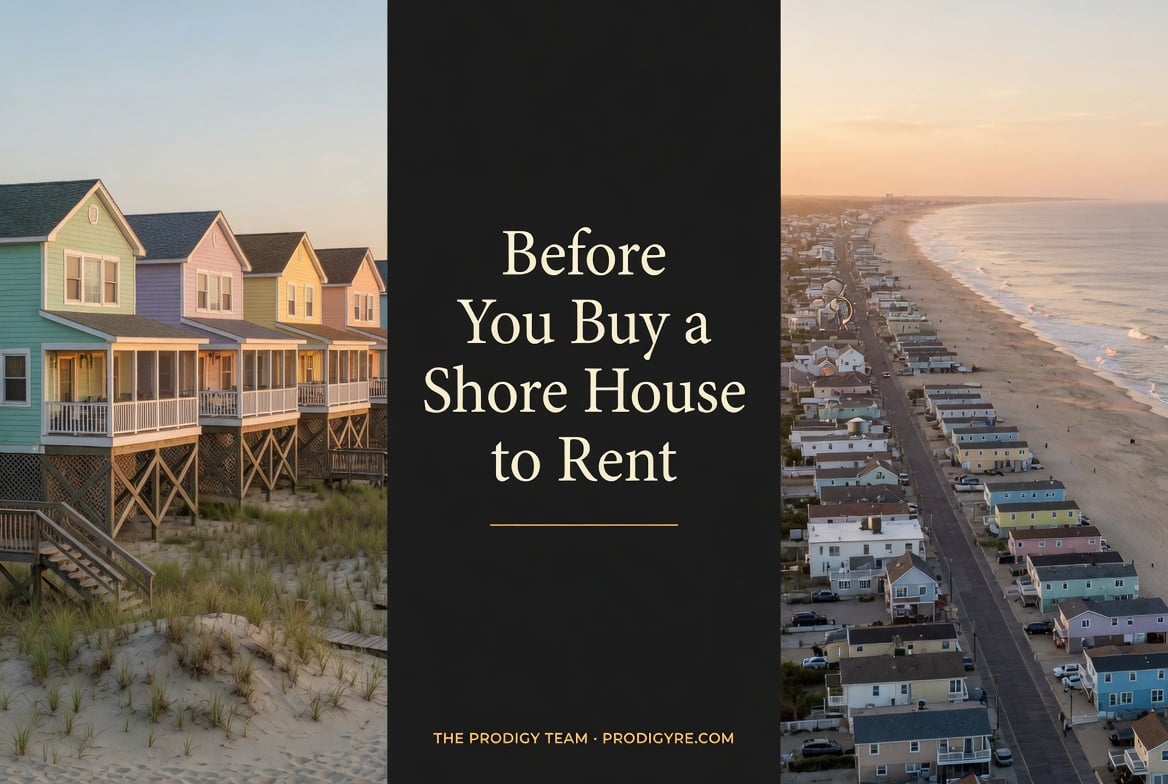
Every spring I take the same phone call. Someone has just closed on a place a few blocks from the sand, run the math on summer weekly rates, and assumed they can list it on Airbnb by the weekend. Then they learn their town requires a seven-day minimum, or that short-term rentals are limited to owners who actually live in the house, or that the borough simply will not issue a permit for their property at all. The deal still works for some of them. For others, the number that made the purchase make sense was never legally available.
There is no shortcut around this, because there is no single rule to learn. New Jersey leaves short-term rental regulation almost entirely to its municipalities. The result is a patchwork that changes not just county to county but borough to borough — and along the Shore, where a summer week can carry a year's worth of expectation, the gap between a permissive town and a restrictive one is the difference between a sound investment and a stranded asset. It matters all the more right now, with major development reshaping demand across Monmouth County and pushing buyers into towns they had not previously considered.
When people ask whether they can rent a house short-term at the Shore, they are usually expecting a yes or a no. The honest answer is that it depends entirely on which town the deed is filed in. The state sets the tax framework and a baseline definition — a short-term rental is generally a stay of fewer than 30 consecutive days — and then steps back. Everything that determines whether your plan is viable is written at the municipal level: minimum-stay floors, permit and registration regimes, occupancy caps, owner-residency requirements, and the enforcement teeth behind them.
Even the definition is not safe to assume. Most towns use that 30-day line, but a few do not — Eatontown, for instance, has treated any residential occupancy under 90 days as a short-term rental. A chart you find online is a starting point, not an answer. Ordinances get amended, tabled, revived, and tightened on a regular cadence, often in direct response to a single bad summer. The maps below reflect what each town's code says as of this writing, but the only authority that counts is the borough's current ordinance on the day you go to contract.
Here is how the markets I work most closely treat short-term rentals today, split by county. Asbury Park, where boutique development keeps tightening inventory near the boardwalk, runs the strictest regime of the group. If you are weighing the Shore against other markets, it reads well alongside my Staten Island versus Jersey Shore comparison. Read the catch column carefully; it is where most pro formas quietly break.
| Town | Minimum stay / structure | Permit & fee | The catch |
|---|---|---|---|
| Asbury Park | 30 days or less, capped at a cumulative 180 days/yr | $500 initial, $100 renewal, +$20 zoning | Only five owner-occupied / principal-residence classes qualify; occupant-change form per guest |
| Belmar | No minimum-stay ban; summer rental licensing | Summer rental license, posted occupancy | Quality-of-life enforcement and the Animal House bond are the real exposure |
| Bradley Beach | No minimum-stay ban currently; a 7-day rule was tabled | Landlord registration, $100/yr (≤4 units) | Only registered names may occupy; the borough keeps revisiting restrictions |
| Manasquan | Seasonal rental regime; no explicit STR ban | Rental permit + mandatory inspection + rental C of O | Resort-community code built to curb "irresponsible seasonal rentals" — inspections have teeth |
| Long Branch | Rental property registration (Ch. 271) | Annual landlord registration | No STR-specific minimum-stay ban confirmed; verify zoning for your block before assuming nightly use |
| Eatontown | Treats occupancy under 90 days as short-term | Local registration | The unusually long 90-day threshold sweeps in stays most towns would call mid-term |
| Red Bank | Historically limited to mixed-use zones | Zoning-dependent | A residential allowance tied to owner-on-site occupancy has been floated; confirm current zoning status |
| Ocean Township | Sub-30-day rentals prohibited in residential zones | — | A near-ban on true short-term use in residential areas; not a vacation-rental play |
| Marlboro | Sub-30-day rentals prohibited in all residential | — | Inland and effectively closed to STRs; hotels and licensed B&Bs exempt |
| Town | Minimum stay / structure | Permit & fee | The catch |
|---|---|---|---|
| Point Pleasant Beach | 7-day minimum May 15–Sep 30; under 30 days barred off-season | Rental permit and license required | Amended again December 2025; owner-occupied and longtime-resident carve-outs apply |
| Seaside Heights | Permitted with conditions | Registration required | A responsible adult 18+ must supervise any group including minors; fines up to $1,000 |
| Seaside Park | STRs allowed; no current ban | Registration | Quieter neighbor to Seaside Heights, but regulations have been under discussion — watch for changes |
| Long Beach Twp / LBI | Seasonal rental regime | Rental registration, April 1 annual deadline | Bond exposure of $500–$5,000, plus strict in-season construction curfews |
| Brick Township | Reported as heavily restricted | — | Widely cited among hosts as a town to avoid for STRs; confirm the current ordinance directly |
Ordinances change frequently and several towns above have amended recently or have proposals pending. Treat this as a map, not legal advice — confirm the current ordinance with the borough before listing or buying.
Step back from the individual rows and the towns sort into a few groups. At the strict end sit the permit-and-residency regimes — Asbury Park is the clearest example, where short-term rental is essentially reserved for owners living on the property, capped at 180 days a year, and policed with per-day fines. If your plan is a pure non-owner investment, these towns may simply not have a lane for you.
In Asbury Park, renting without a permit can draw fines up to this amount — and each day of unpermitted rental counts as a separate offense. The penalty is designed to stack faster than the income.
Then there are the seasonal-minimum towns, with Point Pleasant Beach as the model: nightly stays are off the table in summer, but a seven-day booking is fine. That single rule reshapes your entire revenue model — you are running weekly vacation rentals, not weekend turnovers, and you price and market accordingly. A separate cluster, mostly inland, has effectively closed the door: Marlboro and Ocean Township bar sub-30-day rentals in residential zones, which takes them off the board for vacation use entirely.
The lighter-touch towns — Belmar, Bradley Beach, Manasquan, Seaside Park — are where many investors find room to operate, but "lighter touch" is not "no rules." Belmar's exposure is not a minimum-stay floor at all; it is the quality-of-life enforcement and bond regime described below — covered in full in my Belmar rental owner's guide. Manasquan's code was written expressly to discipline careless seasonal rentals, and its inspections are real. The northern towns carry their own momentum too, with Long Branch's luxury-condo market drawing institutional money into the corridor. And the whole picture is provisional: Bradley Beach has floated restrictions more than once, Seaside Park has had them under discussion, and Point Pleasant Beach amended its rules again at the end of 2025. The friendly town you buy in this spring can tighten by next.
Several Shore towns carry what is informally called an “Animal House” bond. The mechanism is straightforward and, for an unwary buyer, expensive. If a rental property accumulates two substantiated incidents of disorderly conduct within a 24-month window — substantiated meaning prosecuted and resulting in conviction, not merely complained about — the municipality can require the owner to post a bond against future incidents. On the Shore that bond commonly ranges from $500 to $5,000, and the designation can ride with the property for years.
If your plan is to buy in spring, renovate, and capture summer income, read the noise and construction ordinance before you build the schedule. Long Beach Island and several neighboring towns sharply restrict construction and demolition hours during the season, including bans across much of the weekend. A timeline that pencils out on paper can lose its most valuable working weeks to a curfew you never accounted for — and on the Shore, those weeks are the whole game.
A small but telling one: in Cape May, an owner or manager cannot supply beach tags to renters as something “included” with the rental. It is a minor provision that a surprising number of listings violate without realizing it — and getting it right is one of those quiet signals that your agent has actually read the code.
Then there is the tax layer that rarely makes it into a back-of-the-envelope pro forma. New Jersey short-term stays generally carry the 6.625% state sales tax plus a 5% state occupancy fee, and many towns add a municipal occupancy tax of up to 3% — a combined burden approaching 14.6%. If your booking platform collects and remits it, you are covered; if not, that obligation is yours, and it comes straight off the return you projected.
Can I Airbnb a house anywhere on the Jersey Shore?
No. The rules are set town by town, and several Shore municipalities restrict or effectively bar short-term rentals that are not owner-occupied. Towns such as Marlboro and Ocean Township prohibit sub-30-day rentals in residential zones outright. Always confirm the specific borough's ordinance before you assume short-term income is available.
What is the most common restriction?
A seven-day minimum stay during the summer season. It is the tool towns reach for most often to discourage weekend party rentals while still allowing legitimate vacation use. Point Pleasant Beach is the classic example.
Do I have to live in the property?
In several towns, yes. Asbury Park, for example, limits short-term rentals to a handful of owner-occupied or principal-residence classifications, so a pure investment property may not qualify at all.
What happens if I rent without a permit?
Per-day penalties that stack quickly. In Asbury Park, fines run as high as $2,000 per violation, with each day of unpermitted rental treated as a separate offense.

Have a Shore property in mind and want to know what its town actually permits before you make an offer? That research is exactly what I do for clients across Monmouth and Ocean counties.
Call 718-873-7345Thinking of buying — or selling — a Shore investment property?
Let's talk through the ordinance, the numbers, and the realistic return before you commit. Local code knowledge is the difference between a sound buy and a stranded one.
Start the ConversationThis article is informational only and reflects ordinances in effect at the time of writing; it is not legal advice. Anthony Licciardello is a licensed real estate broker, not an attorney. Municipal short-term rental rules change frequently — confirm current requirements directly with the municipality before buying, listing, or renting.
Prodigy Real Estate is an innovative real estate company offering high-end video production, home valuation services, purchasing, and home sales. Serving New York and New Jersey.