
Anthony Licciardello | June 15, 2026
Edison, NJ
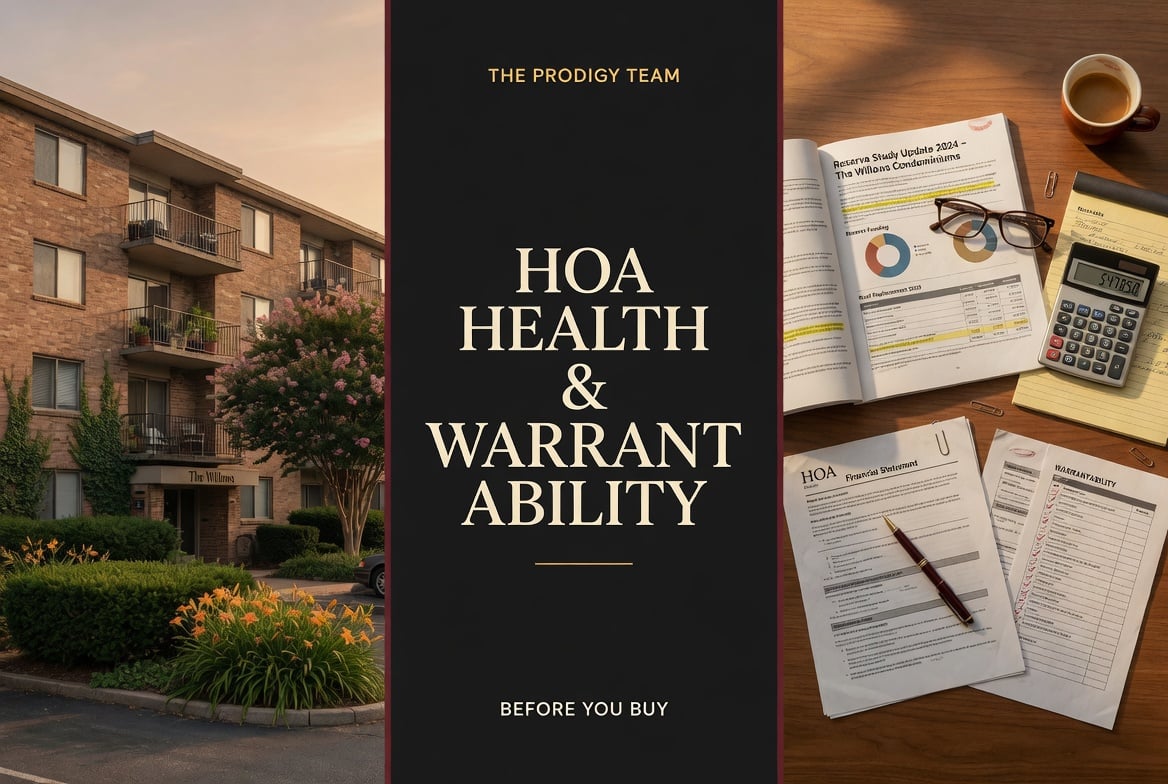
Buy a house and its condition is yours alone to manage. Buy a condo and you inherit a stake in a shared building and the homeowners association that runs it — its reserve fund, its deferred maintenance, its delinquencies, and its ability to qualify for financing all become your concern. In Edison, where much of the condo stock dates to the 1980s and 1990s, that matters more than ever in 2026: New Jersey's recent reserve law and sweeping new Fannie Mae and Freddie Mac rules have made an association's financial health the difference between a condo you can finance and resell, and one you cannot. This guide explains the rules and gives you the exact documents to demand before you make an offer.
This guide is part of our Edison condo and townhome cluster. For the overview and the other guides, start at the Edison Condos & Townhomes Buyer's Guide.
“Warrantable” means a condo project meets the standards Fannie Mae and Freddie Mac require to back a conventional mortgage on a unit. When a project is warrantable, buyers can get ordinary financing. When it is not — because reserves are too thin, too many owners are behind on dues, insurance falls short, or paperwork is missing — the consequences cascade. Buyers are pushed toward portfolio or cash purchases that demand bigger down payments and steeper discounts, the pool of people who can buy shrinks, and values across the whole building soften. The unit did not physically change; its financing did. That is why an association's health is not a back-office detail — it is the single biggest factor in whether a condo is a sound purchase.
The uncertainty is widespread. A 2025 Community Associations Institute survey of more than 700 board members, managers, and industry partners found that 42% were unsure whether their own community even qualified for Fannie Mae or Freddie Mac financing — and among communities found ineligible, 64% said it hurt home sales or property values. If the boards themselves are unsure, a buyer cannot afford to assume.
From the Broker
“I've watched a clean, move-in-ready condo sit unsold because the association's reserves couldn't clear the new lending bar. The unit was fine — the building's books weren't. Pull the association's financials before you fall for the kitchen, every single time.”
Anthony Licciardello, Broker, The Prodigy Team
In the wake of the 2021 Surfside collapse in Florida, New Jersey enacted a structural-integrity and reserve law that took effect in January 2024. Broadly, it requires many community associations to obtain reserve studies on a recurring cycle — generally every five years — backed by long-term funding plans, and it requires structural inspections of certain “covered” buildings with load-bearing concrete, masonry, or steel systems. The intent is to stop associations from deferring big-ticket repairs until they become emergencies funded by surprise assessments.
A nuance that matters for Edison's many wood-frame garden communities: a building may be exempt from the structural-inspection requirement and still be subject to the reserve-study requirement. In other words, “our building doesn't need the structural inspection” is not the same as “our reserves are fine.” Ask which requirements apply to the specific association and whether it has complied.
On March 18, 2026, Fannie Mae issued Lender Letter LL-2026-03, with Freddie Mac publishing a matching bulletin the same day. Together they tighten the financial bar a condo project must clear for conventional financing, and the timeline matters:
Limited Review retired — effective for loan applications dated on or after August 3, 2026. The streamlined review path is eliminated for established projects with more than ten units; nearly every condo loan in such a project now requires a comprehensive Full Review of the association's budget, reserves, insurance, delinquencies, litigation, and special assessments.
Reserve requirement rising from 10% to 15% — for applications dated on or after January 4, 2027. Projects will need to budget a minimum of 15% of annual income for reserves and deferred maintenance, up from 10%. Many associations do not currently meet even 10%, so this may force higher dues — or push a project out of eligibility.
Insurance deductible cap — effective July 1, 2026. The master policy's per-unit deductible is capped at $50,000, and insurance shortfalls are an independent basis for ineligibility.
Delinquency threshold. Full Review flags projects where more than 15% of units are sixty or more days behind on assessments — a red flag for financial distress.
There is some relief at the small end — projects with ten or fewer units gained an expanded review waiver, and the old 50% investor-concentration limit was retired. But for the typical Edison garden or mid-rise community of more than ten units, the direction is clearly toward higher reserves and deeper scrutiny.
Before you commit to an Edison condo, ask the seller, listing agent, or association manager for the following — and have your lender confirm the project's standing early, not at the closing table:
If an association cannot or will not produce these, treat that as information in itself. A well-run community answers these questions readily; a reluctant one is telling you something.
Regulatory details reflect Fannie Mae Lender Letter LL-2026-03 and Freddie Mac Bulletin 2026-C (issued March 18, 2026) and New Jersey's 2024 structural-integrity and reserve legislation, with effective dates as noted. Rules and dates can change and application varies by project; confirm specifics with your lender and a qualified attorney. This is general information, not legal or financial advice.
Selling an Edison condo? Get ahead of the new rules.
The 2026 lending changes cut both ways: a seller whose association has its financials and warrantability in order will sell faster and to more buyers — including the many New York buyers in The Prodigy Team's pipeline, a large share from Staten Island, for whom a clean, financeable condo is the easy first step into New Jersey. We help sellers assemble the right package and reach that demand.
Anthony Licciardello, Broker, The Prodigy Team · 718-873-7345
See What Your Edison Condo Is Worth
A warrantable condo is one whose project meets Fannie Mae and Freddie Mac standards for reserves, delinquencies, insurance, ownership concentration, and more, allowing buyers to obtain conventional financing. A non-warrantable project can usually only be financed through portfolio or cash purchases, which shrinks the buyer pool and can pressure values.
Under Lender Letter LL-2026-03, the elimination of Limited Review applies to loan applications dated on or after August 3, 2026, and the higher 15% reserve requirement applies to applications dated on or after January 4, 2027. The master-policy per-unit deductible cap of $50,000 took effect July 1, 2026.
Yes. A New Jersey law effective in January 2024 requires many associations to obtain recurring reserve studies with long-term funding plans, and requires structural inspections of certain covered buildings. A community can be exempt from the inspection requirement while still being subject to the reserve-study requirement.
Request the operating budget, the latest reserve study and reserve balance, special-assessment history, the delinquency rate, the master insurance policy and deductible, any pending litigation, recent board minutes, and any required structural reports — and have your lender confirm the project is currently warrantable before you remove contingencies.
Prodigy Real Estate is an innovative real estate company offering high-end video production, home valuation services, purchasing, and home sales. Serving New York and New Jersey.