
Anthony Licciardello | June 1, 2026
Chatham, NJ
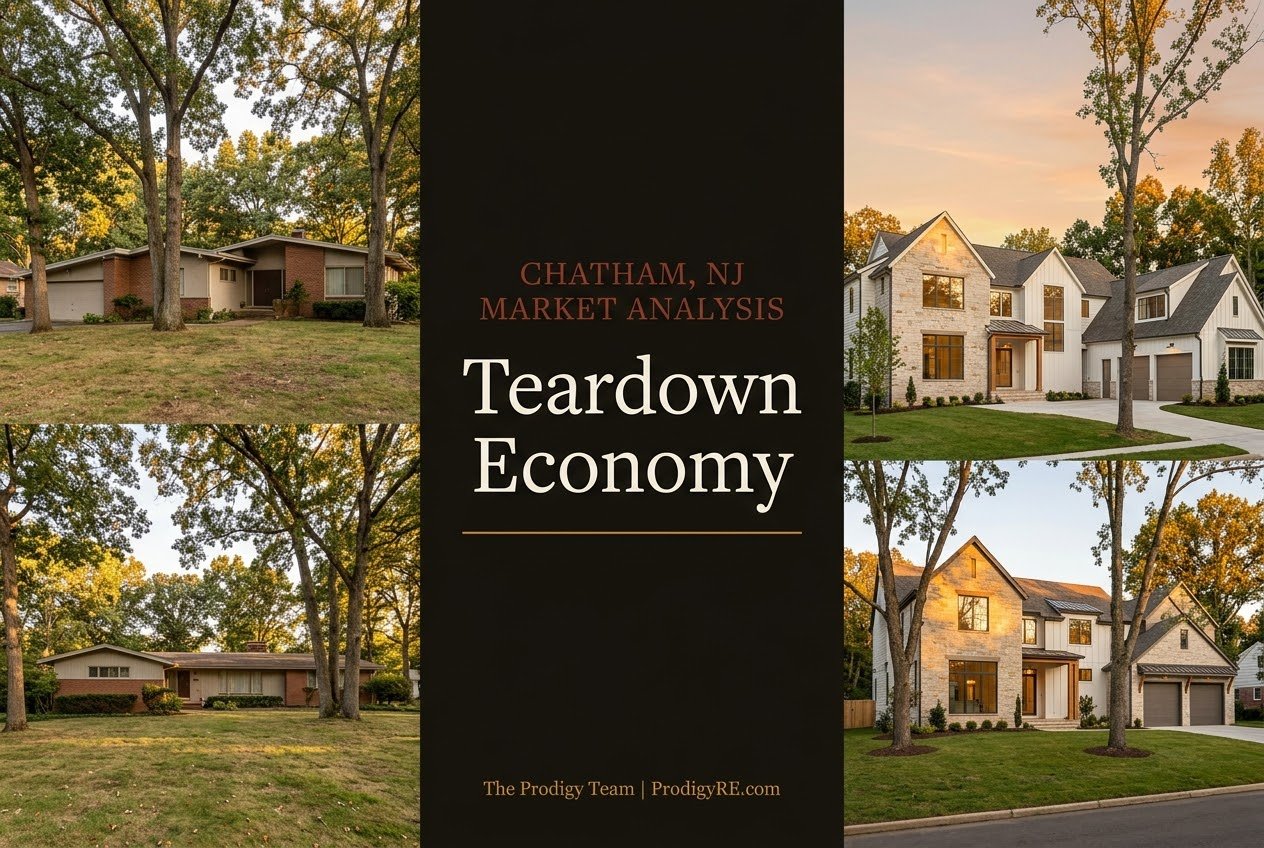
In parts of Chatham, the most valuable thing on the lot is the lot. Here’s how the teardown economy works — and what it means whether you’re selling an older home or buying a new one.
Why are older homes in Chatham being torn down?
Because in a high-value, low-inventory market with aging housing stock, a well-located lot can be worth more with a new home on it than the existing older house is worth standing. Builders pay for the land and the location, not the dated kitchen — so on desirable parcels, demolition and rebuild can pencil out better than renovation. New Jersey ranks among the top states nationally for demolition permits for exactly this reason.
Drive through parts of Chatham Township and you’ll see it: a modest mid-century house with a dumpster out front, and three doors down, a just-finished new build on a lot the same size. This is the teardown economy, and it’s one of the least-understood forces shaping Chatham’s high end. It isn’t random — it follows a clear financial logic, and reading that logic correctly is worth real money to both sellers and buyers. Get it wrong, and a seller over-renovates a home a builder will erase, or a buyer misjudges what they’re competing for.
Every property has two values stacked together: the land and the improvement (the structure on it). In most markets the house is worth far more than the dirt. But in a supply-constrained, high-demand town like Chatham — where buyers want to be inside the school district and near the train, and there’s very little vacant land — the land value climbs until, for older or smaller homes, it approaches or exceeds the value of the structure. At that tipping point, the math flips: the highest use of the parcel is a new, larger home, and the existing house becomes a cost to remove rather than an asset to sell.
This isn’t a Chatham peculiarity — it’s a New Jersey pattern, intensified here. The state’s housing stock is old, and from 2023 through 2025 New Jersey ranked third in the nation in total demolition permits, behind only California and Florida. Nationally, teardown-related projects made up roughly 7% of single-family construction starts in 2024. In a desirable Morris County town, that statewide current runs especially strong on the best blocks.
In nearby Scotch Plains, an older home was listed around $500,000 and sold for about $450,000 — then bulldozed and replaced with a home worth close to $2 million. The buyer wasn’t paying for the house; they were paying for the land under it. That is the teardown calculus in a single transaction, and the same logic plays out on Chatham’s most sought-after lots.
If you own an older or smaller home on a desirable Chatham lot, the teardown dynamic can work powerfully in your favor — if you recognize it. The classic mistake is pouring money into renovations before selling: a new kitchen, refinished baths, updated systems. If your most likely buyer is a builder or a buyer-with-builder who intends to knock the house down, those upgrades are largely wasted — you’re spending to improve something that’s about to be demolished.
The smarter move is to understand your land value first. If the parcel’s location, size, and zoning make it a strong rebuild candidate, you may be best served marketing it honestly to that audience and skipping the cosmetic spend entirely. Two homes in similar condition can attract completely different buyers based on their lots — and pricing for the right buyer pool is the whole game.
The first question I ask about an older Chatham home isn’t “what does it need” — it’s “who’s the buyer.” If the lot screams rebuild, I’d rather a seller save the $80,000 renovation and let the land speak. I’ve watched owners spend heavily on finishes that the eventual buyer dumpstered within a month. Knowing which side of the tipping point your home sits on is the difference between a smart sale and an expensive one.
For buyers, the teardown economy cuts two ways. If you want a turnkey, brand-new home in Chatham, new construction on a rebuilt lot is increasingly where you’ll find it — modern layouts, current systems, and finishes that older homes can’t match without a gut renovation. The trade-off is price: you’re paying for both the premium land and a new structure, which puts these among the most expensive homes in town.
If instead you’re hunting for a renovate-it-yourself older home on a great lot, understand that you’re often competing with builders for the same parcels — and builders run disciplined numbers. That competition puts a firm floor under well-located older homes, which is why “a fixer in a great spot” in Chatham rarely sells at a bargain. Knowing whether you’re bidding against families or against developers changes how you should structure an offer.
New construction carries its own diligence list: confirm the builder’s reputation, that permits and the certificate of occupancy are properly closed out, and that property taxes will be reassessed on the new structure — the tax bill on a rebuilt home is far higher than the teardown’s old bill. Budget for the reassessed number, not the prior owner’s.
There’s a tension worth naming. Chatham’s appeal is partly its historic character — the pre-war colonials, the tree-lined streets, the sense of a town with roots. Teardowns trade some of that character for modern square footage, and not everyone welcomes the change; it’s a live conversation in many desirable older suburbs. The Borough’s historic Manor Section feels different from a Township street with several new builds, and buyers often have a clear preference once they notice it.
For your own decision, the practical point is simply to know what you value. If period character matters to you, the older Borough sections protect it best; if you want new-construction convenience, the Township’s rebuild activity is where to look. Neither is wrong — but they’re different products, and the teardown trend is steadily shifting the mix between them.
For how this plays out by section, see the Chatham neighborhoods guide; for the full market picture, the complete Chatham real estate guide.
Why are homes in Chatham being torn down and rebuilt?
Because land in this high-demand, low-supply town is so valuable that, for older or smaller homes on good lots, a new build is the highest use. Builders pay for the location and the dirt, not the dated structure. New Jersey ranks third nationally in demolition permits, reflecting old housing stock and strong rebuild economics.
Should I renovate my old Chatham home before selling?
Maybe not. If your lot is a strong rebuild candidate and your likely buyer is a builder, renovations can be wasted money — the work gets demolished. Understand your land value and likely buyer pool before spending on cosmetic upgrades.
Is buying a fixer-upper in Chatham a good deal?
Rarely a bargain. Well-located older homes draw builder competition, which keeps prices firm. You’re often bidding against developers running disciplined land-value numbers, so structure your offer knowing who you’re up against.
Will a new-construction home have higher taxes than the home it replaced?
Yes. The property is reassessed on the new, larger structure, so the tax bill is substantially higher than the teardown’s old bill. Budget for the reassessed figure rather than the prior owner’s historical taxes.
This article is informational and not legal, tax, or construction advice. Demolition, zoning, permitting, and assessment rules are set by the municipalities and change over time. Confirm current requirements with the Chatham Borough or Chatham Township construction and zoning offices, and consult qualified professionals before acting.

Anthony Licciardello
Broker of The Prodigy Team and a licensed real estate broker in New Jersey and New York. A former Director of Community Affairs in the Bloomberg Administration and member of the Staten Island Growth Management Task Force, Anthony brings a land-use–aware, data-first lens to teardown and new-construction economics across the New York–New Jersey corridor. 718-873-7345
Find out what your land is really worth.
The Prodigy Team reads land value against improvement value before you renovate, sell, or bid — and our New York–to–New Jersey pipeline connects the right buyers, builders, and sellers to the right Chatham lots.
Get Your Home Valuation →Prodigy Real Estate is an innovative real estate company offering high-end video production, home valuation services, purchasing, and home sales. Serving New York and New Jersey.