
Anthony Licciardello | May 30, 2026
Chatham, NJ
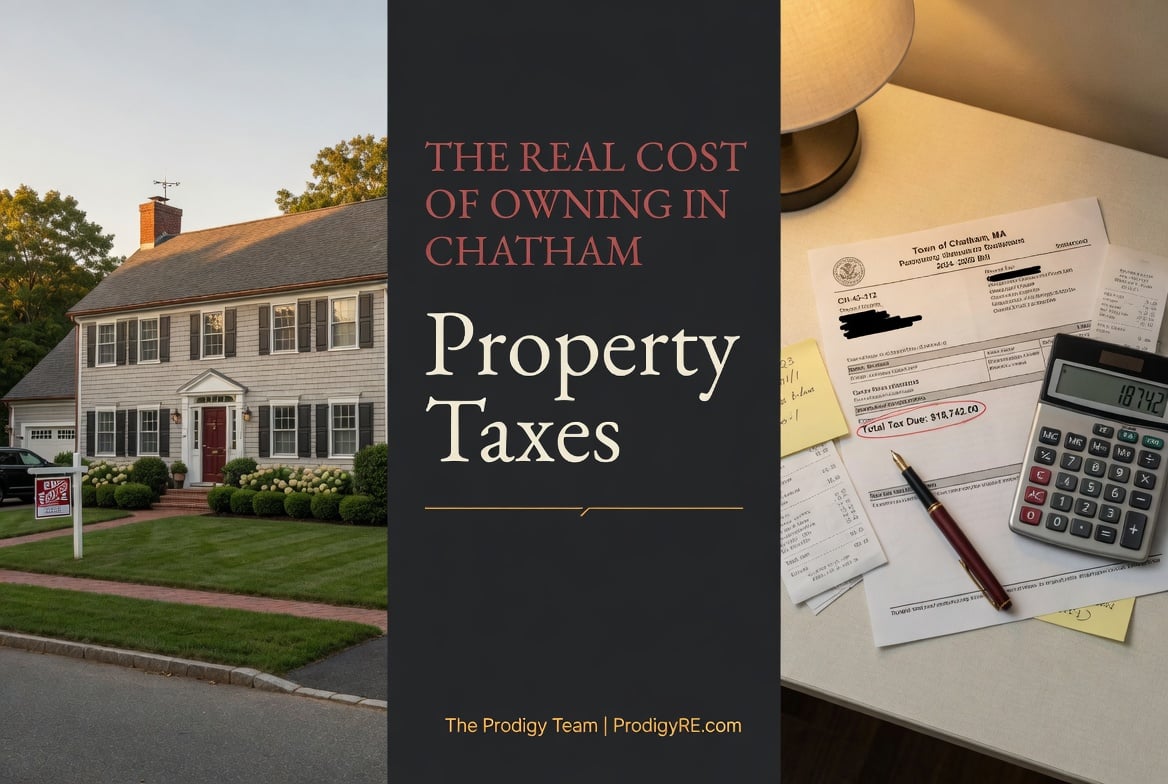
A five-figure tax bill is part of the deal in Chatham. Here’s what you’ll actually pay, where the money goes, and how to make sure your assessment is fair.
How much are property taxes in Chatham, NJ?
The effective rate in both Chatham Borough and Chatham Township runs around 1.9% of market value. In 2025 the Township’s average bill was roughly $18,370, and the Borough’s ran several thousand dollars lower, in line with its lower home values. About two-thirds of either bill funds the shared school district.
New Jersey carries the highest property taxes in the country, and in a high-value town like Chatham that translates into bills most of the country would find startling. But the headline number hides more than it reveals. A Chatham tax bill is built from three separate pieces, dominated by one of them, and the gap between the Borough and the Township is smaller than the home-price gap suggests. Understanding how the bill is assembled is the difference between accepting a number and knowing whether it’s right.
Every New Jersey property tax bill is the sum of three levies: the local school tax, the municipal tax, and the county tax. Each governing body sets its own budget; the totals are divided across all taxable property and expressed as a rate per $100 of assessed value. Your bill is that combined rate multiplied by your home’s assessed value.
Two terms matter here. Assessed value is the figure the municipal assessor assigns your property; market value is what it would actually sell for. The two are rarely identical, which is exactly what makes appeals possible. The effective rate — your bill divided by your home’s true market value — is the honest cross-town comparison, because it strips out differences in how towns assess. In Chatham, that effective rate sits around 1.9% in both the Borough and the Township.
Here are the real numbers, dated so you can judge their freshness. In 2025, Chatham Township’s average annual bill was about $18,370 — and it rose nearly 7% that year, one of the larger single-year jumps in its legislative district. Chatham Borough runs several thousand dollars lower; its average bill has historically sat in the mid-teens of thousands and tracks the Borough’s lower home values. Some estimate sources put the Township’s median bill north of $20,000, reflecting its higher-priced homes; treat any single figure as directional and confirm the specific property.
Township 2025 average and year-over-year change per NJ municipal tax dashboard reporting; effective rate per assessment-based estimates. Borough figure historical (mid-teens). Verify any individual property with the municipal tax collector.
“Average” and “median” bills are town-wide summaries — they are not your bill. A specific home’s tax depends on its own assessed value, which can be well above or below the town average. Before you make an offer, pull the actual current tax line for that exact property rather than assuming the town number.
The single most useful fact about a Chatham tax bill: roughly two-thirds of it funds the schools. In recent reporting the school share was about 63% in the Borough and about 66% in the Township, with the municipal and county portions splitting the remainder. That is a higher school share than many New Jersey towns, and it is the clearest financial expression of what drives this market — the district families move here for is the thing their taxes overwhelmingly pay for.
| Share of bill | Chatham Borough | Chatham Township |
|---|---|---|
| School | ~63% | ~66% |
| Municipal | ~21% | ~19% |
| County | ~15% | ~15% |
Shares per recent NJ Department of Community Affairs–based local reporting; proportions shift modestly year to year.
For buyers relocating from New York City, the deductibility of state and local taxes — the SALT deduction — is a live part of the math. When the federal cap on that deduction is low, a $18,000–plus property tax bill is only partly deductible, which raises the true after-tax cost of ownership and is worth modeling before you buy. The cap has been a moving target in Washington, so the prudent step is to confirm the current limit and run your own numbers with a tax professional rather than rely on what was true a year or two ago.
The relocation context still favors Chatham for many: even a large New Jersey property tax bill often lands alongside a lower combined cost of living than a comparable Manhattan housing situation, and you get the school district and the yard. The point is simply to enter with eyes open — the tax line is real money, every year, and it belongs in the buy decision rather than as a surprise after closing.
If you believe your assessed value overstates what your home would actually sell for, New Jersey gives you the right to appeal. Appeals are filed with the Morris County Board of Taxation, generally by the April 1 deadline each year, and the case rests on comparable sales: evidence that similar nearby homes sold for less than your assessment implies. Win, and your assessment — and bill — come down.
An appeal only makes sense if the comps actually support it — and in a thin market like Chatham, the right same-municipality comparables are exactly what most homeowners don’t have on hand. That’s the most common place I add value before an appeal: a clear-eyed read on whether your assessment is genuinely high relative to real recent sales, or just high relative to the bill you wish you had.
A few realities worth knowing: assessments are presumed correct, so the burden is on you; you generally cannot appeal simply because the bill rose; and a successful appeal lowers your assessment, not the tax rate itself. For a high-value home, even a modest assessment reduction can be worth real money annually — which is why it’s worth checking rather than assuming.
For the full market picture — pricing, neighborhoods, schools, and commute — see the complete Chatham real estate guide.
How much are property taxes in Chatham, NJ?
The effective rate runs around 1.9% of market value in both the Borough and Township. In 2025 the Township’s average bill was about $18,370; the Borough’s ran several thousand dollars lower, tracking its lower home values. Always confirm the exact figure for a specific property.
Does Chatham Township pay more tax than the Borough?
On average, yes — in dollars. The Township’s higher home values produce higher bills even though the effective rate is similar in both towns (around 1.9%). The difference reflects property values, not a meaningfully higher rate.
What share of Chatham taxes goes to schools?
About two-thirds — roughly 63% in the Borough and 66% in the Township in recent reporting. The municipal and county portions make up the rest. It’s a higher school share than many NJ towns.
Can I appeal my Chatham property taxes?
You can appeal your assessment — not the rate — with the Morris County Board of Taxation, generally by the April 1 deadline. The case rests on comparable sales showing your assessed value exceeds true market value. A successful appeal lowers your assessment and your bill.
This article is informational and not tax or legal advice. Tax figures are dated and approximate; rates, bills, and the SALT deduction change over time. Confirm any specific property’s taxes with the municipal tax collector and consult a qualified tax professional before relying on these numbers.

Anthony Licciardello
Broker of The Prodigy Team and a licensed real estate broker in New Jersey and New York. A former Director of Community Affairs in the Bloomberg Administration and member of the Staten Island Growth Management Task Force, Anthony brings a policy-aware, data-first approach to the true cost of ownership across the New York–New Jersey commuter corridor. 718-873-7345
Know the tax line before you fall for the house.
The Prodigy Team prices and advises on same-municipality data — including a clear read on a property’s real tax picture — and our New York–to–New Jersey pipeline helps relocating buyers budget for ownership with no surprises.
Get Your Home Valuation →Prodigy Real Estate is an innovative real estate company offering high-end video production, home valuation services, purchasing, and home sales. Serving New York and New Jersey.