
Anthony Licciardello | June 8, 2026
Hoboken, NJ
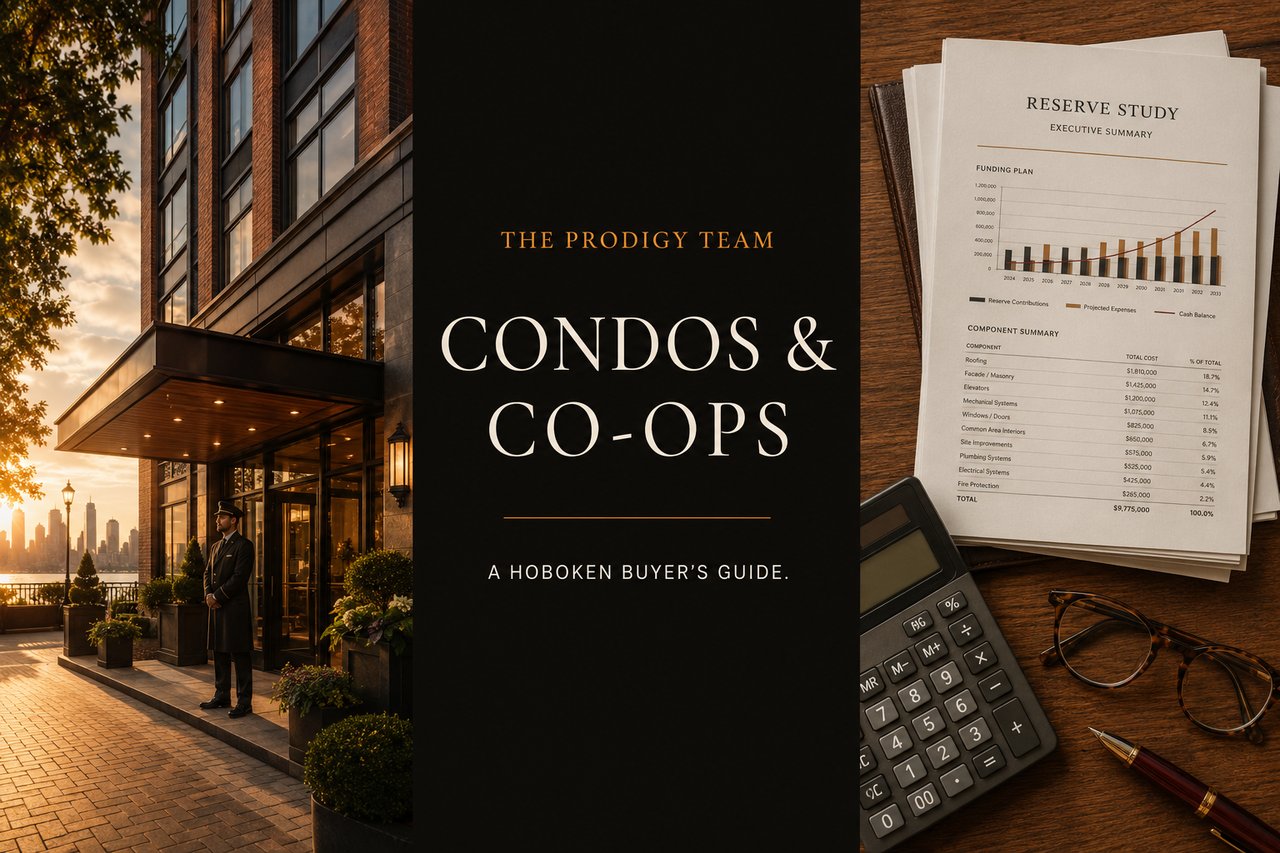
In a city where almost every home is attached, the smartest thing you can do as a buyer is shift your attention from the unit to the building behind it. The association that runs your condo or co-op controls your monthly cost, your reserves, your insurance, and — crucially — whether a future buyer can get a mortgage in the building at all. Get the building right and a Hoboken purchase is a strong one. Get it wrong and even a beautiful unit can become hard to finance, hard to resell, and expensive to own. Here is how to read it before you buy.
This guide is part of our complete coverage of the city. For the full picture, start at our complete guide to buying and selling in Hoboken.
The large majority of Hoboken's for-sale homes are condominiums, where you own your individual unit outright plus a share of the common areas, and financing works much like any other mortgage. A smaller number of buildings are co-operatives, where you do not own the unit directly but rather shares in a corporation that owns the building, along with a proprietary lease for your apartment. The practical differences matter: co-ops often involve board approval of buyers, can have stricter rules on renting and financing, and are financed differently from condos. Neither is inherently better, but they are not interchangeable — know which one you are buying, because it changes your financing, your resale pool, and your day-to-day rights.
From the Broker
“I've had buyers fall in love with a place and only later realize it was a co-op with a board approval and a financing wrinkle they weren't prepared for. There's nothing wrong with a co-op — but you need to know what you're buying on day one, not at the closing table.”
Anthony Licciardello, Broker, The Prodigy Team
Hoboken's associations sit at two ends of a spectrum. At one end are the small associations inside converted brownstones — just a handful of units, low monthly fees, often self-managed, with few or no amenities. They are charming and economical, but a small association can also mean thin reserves, so a major roof or facade repair can land as a sudden special assessment split among very few owners. At the other end are the full-service waterfront and high-rise buildings, where a substantial monthly fee buys concierge staff, a gym, a pool, and a doorman — convenience, but a real recurring cost. Neither model is wrong; the key is to look past the headline fee and ask what it funds, how healthy the reserves are, and whether the building has a history of special assessments. In many Hoboken buildings, flood insurance is part of that cost equation too — see our flood and insurance guide.
“Warrantable” means a condo project meets Fannie Mae and Freddie Mac standards so buyers can get conventional financing. When a building falls short — thin reserves, too many delinquent owners, insurance gaps — buyers get pushed toward cash or specialty loans, the pool of people who can buy shrinks, and values soften. Two recent shifts raise the stakes for Hoboken's many older and converted buildings:
New Jersey's 2024 reserve law. Many associations must now obtain recurring reserve studies with long-term funding plans, and structural inspections of certain buildings — aimed at ending the habit of deferring big repairs until they become emergencies.
Limited Review eliminated — applications dated on or after August 3, 2026. For established projects with more than ten units, the streamlined review path is gone; nearly every loan now requires a full review of the association's finances.
Reserves rising from 10% to 15% — applications dated on or after January 4, 2027. Projects will need to budget at least 15% of annual income for reserves, up from 10%, which may push some buildings to raise dues or fall out of eligibility.
Insurance and delinquency limits. Master-policy per-unit deductibles are capped at $50,000 (effective July 1, 2026), and a project where more than 15% of units are sixty-plus days delinquent raises a financing red flag.
The takeaway for a Hoboken buyer is simple: the association's paperwork now matters as much as the unit, and a building's financing standing can change quickly. Have your lender confirm a project's warrantability early, not at the closing table.
Before committing to any Hoboken condo or co-op, request the following from the seller, listing agent, or association manager — and have your lender confirm the building's standing:
If an association cannot or will not produce these, treat the reluctance as information in itself.
Regulatory details reflect New Jersey's 2024 structural-integrity and reserve law and the 2026 Fannie Mae and Freddie Mac condo project standards, with effective dates as noted. Rules and dates can change and application varies by project; confirm specifics with your lender and a qualified attorney. This is general information, not legal or financial advice.

Buying a Hoboken condo from across the river? We'll read the building for you.
A large share of The Prodigy Team's buyers are New Yorkers — many from Staten Island — making their first Hoboken purchase, where the association is everything. We work both sides of the Hudson and help buyers vet a building's finances and warrantability before they commit, and help sellers get their association's paperwork in order to sell faster.
Anthony Licciardello, Broker, The Prodigy Team · 718-873-7345
See What Your Hoboken Condo Is Worth
The large majority are condominiums, where you own your unit and a share of the common areas. A smaller number of buildings are co-operatives, where you own shares in a corporation that owns the building plus a proprietary lease. The two are financed and governed differently, so it is important to know which you are buying.
Fees reflect what the building provides. Small converted-brownstone associations often have low fees and few amenities, while full-service waterfront and high-rise buildings charge more to fund concierge staff, gyms, pools, and doormen. Look beyond the fee to what it funds and how well the reserves are maintained.
A warrantable condo meets Fannie Mae and Freddie Mac standards for reserves, delinquencies, and insurance, allowing conventional financing. New 2026 rules eliminate the streamlined Limited Review for larger established projects (applications on or after August 3, 2026) and raise the reserve requirement to 15% (applications on or after January 4, 2027), making a building's finances central to whether you can finance or resell.
Request the operating budget and fees, the reserve study and balance, special-assessment history, delinquency rate, the master insurance policy and flood coverage, any litigation, recent meeting minutes, and (for co-ops) the proprietary lease and board rules — and have your lender confirm the project is warrantable before removing contingencies.
Prodigy Real Estate is an innovative real estate company offering high-end video production, home valuation services, purchasing, and home sales. Serving New York and New Jersey.