
Anthony Licciardello | April 19, 2026
Red Bank, NJ
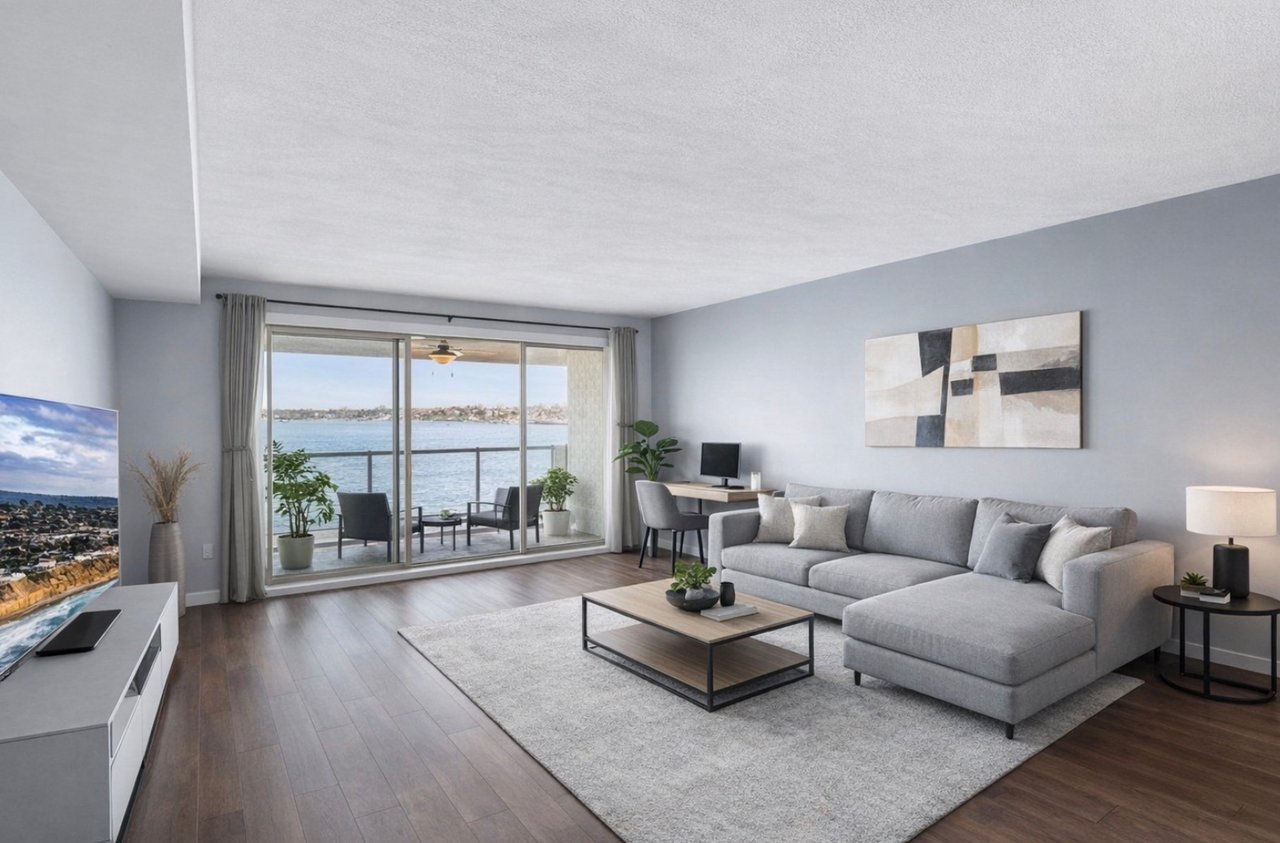
Red Bank attracts a specific kind of condo buyer. Usually someone coming out of a rental, or trading down from a house they no longer want to maintain. They want the lifestyle — downtown access, walkability, a train to the city — without the yard, the snow removal, and the weekend home repair projects. That's a legitimate trade. But condos in Red Bank come with their own version of complexity, and it's not visible in the listing photos.
Two units in the same borough, similar square footage, similar finishes, similar location — can carry monthly costs that differ by $400 or more once HOA fees are factored in. One building may be sitting on a well-funded reserve. The next one may be three years away from a roof assessment that nobody's saved for. The difference isn't in the price. It's in the documents that buyers skip before making an offer.
This post covers what those documents reveal, what questions to ask before you get emotionally attached to a unit, and the Red Bank-specific rules that affect what you can and can't do with your condo once you own it. For a breakdown of which part of Red Bank makes sense for your lifestyle before you start searching, see our Red Bank neighborhood guide.
HOA Fees
Monthly HOA fees on Red Bank condos and attached homes currently range from roughly $150 for simpler fee-simple townhouse structures to over $500 per month for units in buildings with more shared systems and amenities. That range sounds wide. It is — and it's entirely explainable once you understand what each building's fee is actually paying for.
At the lower end, a townhouse-style property may carry a minimal HOA covering only landscaping and common-area liability insurance. The owner pays separately for water, trash, exterior repairs, and everything else. The fee looks cheap. The total monthly cost of ownership is not necessarily low. At the higher end, a building fee might bundle water, sewer, heat, building insurance, elevator maintenance, parking structure upkeep, and professional management into one number. That $500 replaces a long list of bills you'd carry separately in a single-family home.
The only way to compare honestly is to read what each fee includes and calculate total monthly cost of ownership across both options. Your agent should pull that breakdown for every unit you're seriously considering. If they aren't doing that, ask for it.
| What May Be Included | What May Be Excluded |
|---|---|
| Building insurance (exterior/structure) | Interior unit insurance (your responsibility) |
| Water and sewer | Electricity and gas (usually owner-paid) |
| Landscaping and snow removal | Parking (sometimes a separate monthly charge) |
| Trash removal | Special assessments (billed separately when they occur) |
| Common area maintenance and management fees | Interior renovations or unit-specific repairs |
Reserve Funds
Every condo association is responsible for major capital expenditures — roof replacement, elevator overhaul, parking lot resurfacing, HVAC systems for common areas. A well-run association sets aside money each year in a reserve fund to cover these costs when they come due. A poorly run one doesn't, and when the bill arrives, every unit owner gets hit with a special assessment — a lump-sum charge billed on top of regular HOA dues.
Special assessments can run into the thousands. They can hit without warning. And they become your problem the moment you close on a unit in that building — even if the deferred maintenance predates your ownership by years. This is not a hypothetical. It's one of the most common ways condo buyers in New Jersey get surprised in the first year of ownership.
Before making an offer on any Red Bank condo, request the most recent reserve study, the last two years of board meeting minutes, and the current annual budget. The minutes will tell you whether major repairs have been discussed, deferred, or argued over. The reserve study tells you whether the money is actually there to pay for them.
Under New Jersey's Condominium Act, associations are required to maintain adequate reserves and disclose their financial condition to prospective buyers. That disclosure is only useful if you read it. Most buyers don't. The ones who do are the ones who don't get hit with a $6,000 assessment in year two.
Parking
Red Bank is a compact, dense borough where street parking is competitive and downtown lots fill up on weekends. For condo buyers, parking isn't a secondary consideration — it's a material factor in resale value, daily livability, and what you'll actually pay each month.
Some Red Bank condos include a deeded parking space in the sale price. Others include a space as part of the HOA but with restrictions on the number of vehicles. Still others have no dedicated parking at all, relying entirely on street access or a monthly agreement with a nearby lot. Each of these represents a meaningfully different ownership experience — and a different resale profile when it comes time to sell.
Ask whether the parking space is deeded to the unit or assigned by the association. A deeded space transfers with the property and is yours regardless of what the board decides later. An association-assigned space can be moved, reassigned, or eliminated by a board vote. That's a distinction worth clarifying before you sign anything.
Short-Term Rentals
Red Bank updated its short-term rental ordinance in May 2024 after a contentious multi-year debate. The current rule allows short-term rentals — stays of up to 28 consecutive days — only for owner-occupied primary residences. Investors and absentee owners cannot short-term rent condos, apartments, or houses in Red Bank under the current ordinance.
For owner-occupants who do qualify, the process requires registering as a commercial entity with the borough and obtaining a short-term rental permit from the Red Bank fire marshal's office before renting or even advertising the property. Any violation carries fines of up to $2,500 per violation per day, and three separate violations result in a permanent ban from operating a short-term rental in the borough.
Even if you qualify under the borough ordinance, your condo association may have its own rules that restrict or prohibit short-term rentals entirely. The HOA governing documents control what happens inside the building regardless of what borough law allows. Read both before assuming Airbnb income is part of your ownership plan.
For buyers buying strictly as investors with no plan to occupy the property, the STR path is closed under current law. Long-term rentals remain available — though buildings with three or more units fall under Red Bank's rent control ordinance, which regulates annual increases and requires landlords to navigate the borough's Rent Leveling Board for certain changes. That's a separate and meaningful layer of complexity for multi-unit investors to factor in.
Resale and Financing
Buyers focus on kitchens and bathrooms. The two variables that actually drive long-term condo resale performance in a market like Red Bank are building health and FHA approval status.
A building with strong reserves, a low owner-delinquency rate, and no pending litigation is a building that future buyers can finance easily. A building with deferred maintenance, underfunded reserves, or active HOA lawsuits is a building that lenders may flag — which narrows your buyer pool when it's time to sell and can suppress your price regardless of how nice your individual unit looks.
Not every condo building in Red Bank is FHA-approved. Buildings that are give your future buyers access to FHA financing — a meaningful advantage in a market where first-time buyers and lower-down-payment buyers are a significant part of demand. Buildings that are not FHA-approved limit future buyers to conventional financing, which reduces your resale pool and can affect how competitive offers get when you eventually list. Check the HUD condo approval database before you buy.
Due Diligence Checklist
Red Bank condo ownership works well when the building is healthy, the fee is honest, and the rules match how you plan to live. It works poorly when buyers skip the documents and get attached to a listing before they understand what they're actually buying into. The Prodigy Team reviews HOA financials and governing documents as a standard part of buyer representation in this market. Contact Anthony Licciardello at (718) 873-7345 before you make an offer.
HOA fee range: active Red Bank MLS listings as reported in recent market analysis. NJ condo HOA average: First Service Residential NJ HOA fee analysis. Short-term rental ordinance: Red Bank Borough, revised ordinance adopted May 2024 / Two River Times reporting. Rent control: Red Bank Rent Leveling Board, Borough Code. NJ Condominium Act reserve requirements: NJ Department of Community Affairs.
Common Questions
How much are HOA fees for condos in Red Bank NJ?
Active Red Bank listings show monthly dues ranging from approximately $150 for fee-simple townhouse-style properties to $308, $406, and $501 per month for condo-style units. The statewide NJ average for condominiums runs $200 to $400 per month. A higher fee is not automatically a problem — what matters is what it covers and whether the building's reserves are adequately funded.
Can you rent out a condo in Red Bank NJ on Airbnb?
Only if you occupy the property as your primary residence. Red Bank's updated STR ordinance limits short-term rentals to owner-occupants only. Investors and absentee owners cannot operate Airbnb-style rentals under current borough law. Owner-occupants who qualify must register with the borough and obtain a permit from the fire marshal before renting or advertising. Your condo association may impose additional restrictions on top of the borough ordinance.
What should I look for in a condo HOA before buying in Red Bank NJ?
Four things matter most: reserve fund adequacy, pending special assessments, owner delinquency rate, and any active litigation. Request the reserve study, last two years of board meeting minutes, and current annual budget before making any offer. Underfunded reserves are the single most common hidden cost buyers discover after closing on a Red Bank condo.
Are condos in Red Bank NJ a good investment?
Red Bank condos benefit from persistent buyer and renter demand in a borough that can't expand its boundaries. The investment case is strongest for owner-occupants and for units in buildings with healthy reserves and manageable fees. The borough's STR ordinance closes the Airbnb income path for absentee investors. Long-term rental demand from commuters and young professionals remains steady, though buildings with three or more units fall under Red Bank's rent control ordinance.
Questions about buying a condo in Red Bank? Contact Anthony Licciardello at the Prodigy Team: (718) 873-7345.
Prodigy Real Estate is an innovative real estate company offering high-end video production, home valuation services, purchasing, and home sales. Serving New York and New Jersey.